After going to press Friday night (Feb. 27), the Ocracoke Observer learned that it won first place for General Excellence for Website in its division by the North Carolina Press Association.
These Special Awards were announced at the N.C. Press Association’s virtual convention Friday evening and posted later on the NCPA’s website.
In the 2020 competition, the Observer placed first ahead of the Carolina Public Press, second-place, and the Coastal Review Online, third. In addition, the Observer won four awards for writing and photography.
Last summer, the Observer co-owners/publishers Connie Leinbach, also the editor, and Peter Vankevich, engaged Cheryl Wilder of Atlas Endeavors LLC to redesign its website.
Although the Observer prints a monthly issue 10 times a year, it competes in the online division, consisting of 14 online newspapers, in the annual contest.
Last year, the Observer took first place in breaking news coverage for its Hurricane Dorian reporting and second place in editorials.
The Ocracoke Observer joined the N.C. Press Association in 2015 and has won more than 40 awards in various categories, including several in first place.
Founded in 1873, the North Carolina Press Association is one of the oldest and largest journalism trade organizations in the nation. It is a member-owned and operated non-profit association established to protect First Amendment freedoms, promote the business interests of North Carolina newspapers and maintain high standards in the industry.
Ocracoke Observers publishers Connie Leinbach and Peter Vankevich with their first-place certificates from the North Carolina Press Association.
The Paycheck Protection Program is open for two weeks exclusively for mom-and-pop businesses and nonprofits to apply for loans. Photo: C. Leinbach
WASHINGTON – The Biden-Harris Administration and the U.S. Small Business Administration are opening up the Paycheck Protection Program for two weeks exclusively for small businesses–women-owned, minority-owned, low- and moderate-income, rural, and other underserved communities.
New policy changes hope to further ensure inclusivity and integrity by increasing access and much-needed aid to Main Street businesses, said SBA Senior Advisor Michael Roth.
To further demonstrate the commitment to racial and gender equity, reaching low and moderate-income, rural, urban, and other underserved areas, the SBA will:
Establish a 14-day, exclusive PPP loan application period for businesses and nonprofits with fewer than 20 employees.
Allow sole proprietors, independent contractors, and self-employed individuals to receive more financial support by revising the PPP’s funding formula for these categories of applicants.
Eliminate an exclusionary restriction on PPP access for small business owners with prior non-fraud felony convictions, consistent with a bipartisan congressional proposal.
Eliminate PPP access restrictions on small business owners who have struggled to make federal student loan payments by eliminating federal student loan debt delinquency and default as disqualifiers to participating in the PPP; and
Ensure access for non-citizen small business owners who are lawful U.S. residents by clarifying that they may use Individual Taxpayer Identification Number (ITIN) to apply for the PPP.
The 14-day exclusivity period began Wednesday (Feb. 24), and the other four changes will be implemented by the first week of March. The SBA is working on the program changes and will communicate details throughout the week.
Through SBA’s nationwide district offices, the agency will work in close partnership with the Biden Administration to further leverage its resource partner network and expand on multilingual access and outreach about the PPP.
Targeted EIDL Advance Low Income Community Mapping Tool: For those who received a partial EIDL grant the SBA is emailing the business owners that qualify for additional grant funds. A low-income community mapping tool is now available to help Targeted EIDL Advance applicants determine if their business is in one. The map is on the COVID-19 EIDL web pageunder Targeted EIDL Advance. The business address must be in a low-income community to qualify so this is a great tool for potential applicants to check to see if they meet that eligibility requirement before applying. https://www.sba.gov/document/support-targeted-eidl-frequently-asked-questions
How to use the Mapping Tool
• The low-income community mapping tool is simple and easy to use.
• Go to https://sbaeidl.policymap.com/app and enter an address into the Location search bar above the map. For best results, enter a complete address (street address, city, state, ZIP code).
• When an address is found, a pin will be placed showing that location on the map.
• If you are unable to locate an address (e.g., rural routes or P.O. boxes instead of a full street address), you can enter a ZIP code into the location search bar and then zoom to an area.
Alternatively, you can also enter latitude, longitude coordinates into the location search bar if available.
• Census tracts that are identified as “low-income communities” are shaded dark purple on the map.
• When hovering over a location on the map, an info bubble will display a “Yes” or “No” based on whether the underlying census tract is identified as a “low-income community”.
• To see more information for a particular census tract, click on the map. A detailed info bubble will show the underlying indicators used to determine eligibility (e.g., poverty rate, census tract median family income (MFI) as a percent of metro area or statewide MFI, etc.)
The Marc Basnight Bridge is the gateway to Pea, Hatteras and Ocracoke islands. Photo: C. Leinbach
To catch up on Ocracoke news and much more, click here
NAGS HEAD – Contractors for the N.C. Department of Transportation are planning to conduct a routine condition inspection of the Marc Basnight Bridge from March 1 to 18.
During the process, one lane of the bridge will be closed during daylight hours Monday through Friday in order to position crews and equipment.
The closures will be no longer than 1.5 miles long, and flaggers will alternate traffic direction during the closure. One lane of the bridge will remain open at all times.
The condition inspection is routine and federally mandated every two years. It is the first such inspection since the bridge opened to traffic in February 2019. For real-time travel information, visit DriveNC.gov or follow NCDOT on social media.
Springer’s Point just before sunset is among the photos in the second-place photo essay award in the Online Division of the N.C. Press Association. Photo: P. Vankevich
The Ocracoke Observer received four awards today at this year’s North Carolina Press Association annual conference.
In lieu of taking place in Raleigh, due to COVID-19 government mandates on public gatherings, the conference, hosted by Shannon Vickery of PBS North Carolina, was online and the honors were presented at a virtual awards ceremony held today (Feb. 26).
A member of the Online Division, which has 14 members, the Observer has won more than 40 awards, including many in first place, since joining the N.C. Press Association (NCPA) in 2015 and entering the contest starting in 2016.
The Observer was among 14 recipients to receive aPelican Award in August from the North Carolina Coastal Federation for its “Dedicated Service to Coastal Community Journalism.” The award was for the Observer’s coverage of Hurricane Dorian.
The winning stories were published on ocracokeobserver.com between October 2019 and September 2020.
Last year, the Observer took first place in breaking news coverage for its Hurricane Dorian reporting and second place in editorials.
Founded in 1873, the North Carolina Press Association is one of the oldest and largest journalism trade organizations in the nation. It is a member-owned and operated non-profit association established to protect First Amendment freedoms, promote the business interests of North Carolina newspapers and maintain high standards in the industry.
With COVID-19 numbers decreasing in North Carolina, Gov. Roy Cooper on Wednesday eased some restrictions.
Cooper lifted the Modified Stay at Home Order, the nighttime curfew, requiring people to stay at home and businesses to close to the public between 10 p.m. and 5 a.m.
The new order is effective Friday at 5 p.m. and will expire at 5 p.m. March 26.
The number of people who may gather indoors will increase from 10 to 25, while 50 remains the limit for outdoors.
The curfew on the sale of alcohol for onsite consumption will be moved from a 9 p.m. stop to 11 p.m. Some businesses, including bars and amusement parks, will now be open for patrons indoors as they adhere to new occupancy restrictions.
The mandatory face mask order is still in effect and Cooper and Department of Health & Human Services Secretary Dr. Mandy Cohen stressed that social distancing and hand washing is still in effect.
Cohen said the key metrics show the COVID-19 virus decreasing in the number of new cases, positive cases and hospitalizations.
The number of North Carolina counties coded as “Red” (“critical community spread” of the virus) has been more than halved and now stands at 27, down from 67 “Red” counties on Feb. 4. There are now 40 “Orange” counties (“substantial community spread”) compared to 33 on Feb. 4. Another big change is that the number of “Yellow” counties (significant community spread, though the lowest) is now up to 33 from only 6 counties on Feb. 4.
Hyde County dropped down on the new County Alert map, moving from Red to Yellow. The percentage of positive test results for Hyde County is given as 7% in the past two weeks.
As of Feb. 19, Hyde County Health reported the following case numbers for Hyde: 633 total cases, nine active cases, 616 recoveries and eight deaths.
However, the new variants, which are more contagious, are a wild card, Cohen said.
“If we see more viral spread (in the next few weeks), we’ll assess as we go along,” she said.
Thursday was the first day teachers and other education personnel are eligible for the vaccine.
“But our supply is still limited,” she said.
She said North Carolina has been getting 3% of the total amount of vaccines available, or 35,000 to 65,000 doses.
The state has administered more than 2 million vaccines which means that 1 million North Carolinians have received two doses.
Dr. Cohen also provided an update on North Carolina’s data and trends.
Trajectory in COVID-Like Illness (CLI) Surveillance Over 14 Days
North Carolina’s syndromic surveillance trend for COVID-like illness is decreasing.
Trajectory of Confirmed Cases Over 14 Days
North Carolina’s trajectory of cases is decreasing.
Trajectory in Percent of Tests Returning Positive Over 14 Days
North Carolina’s trajectory in percent of tests returning positive is decreasing.
Trajectory in Hospitalizations Over 14 Days
North Carolina’s trajectory of hospitalizations is decreasing.
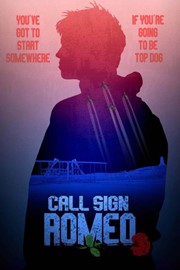
The producers of a new feature-length film that makes the Outer Banks a central character are looking for local talent. According Rayolight Productions — the filmmakers behind Lost In Buffalo City and Night of the Fluffet — the new effort is a high school sports film titled Call Sign Romeo.
In a press release issued Feb. 22, director Raymond Wallace describes the film as, “Creed meets Top Gun, set amidst an authentic Outer Banks story. It’s a great homegrown story that will feature numerous area landmarks that Outer Bankers in particular are bound to recognize and appreciate.”
The film’s website explains that the story is about “high school wrestler Chris Miller (as he) pursues his dream to fly jets at the U.S. Naval Academy. He’ll need to win a state championship, while navigating the challenges of his senior year, including his girlfriend going to West Point, a nemesis they call Kid Hulk, and Navy SEAL trainers that stand in his way.”
Not only are the filmmakers looking for Outer Banks actors and extras to be in the movie, they want to create a soundtrack from local bands to “set the mood of the film’s action-packed wrestling scenes.” Production is expected to begin in March with filming anticipated to last through May.
Interested actors and musicians are encouraged to visit www.CallSignRomeo.com for more information about the project, character descriptions, and instructions for auditions and music submissions. The casting call will remain open until the roles are filled, and interested talent are encouraged to submit their headshots, resumes, reels, and contact information by March 12. The producers will contact those selected from submissions.
For more information on how you can be a part of the project, visit the websiteor follow Rayolight Productions on social media for the latest news and behind the scenes updates.
To read more profiles on the Birds of Ocracoke, clickhere
By Peter Vankevich
First, are these birds gulls or seagulls?
“Seagull” is the colloquial name for birds in the family Laridae, but “gull” is preferred since these birds can be found far away from the sea or ocean. Birders call them gulls, which is how this story will refer to them.
Bird names can be imaginatively colorful. Our regional checklist has Ruddy Turnstone, Semipalmated Plover, Black legged Kittiwake, Chuck-will’s-widow, Lapland longspur, and Painted Bunting.
Our feature’s curious name does not imply any form of inferiority. In fact, it has one of the more interesting tales to tell as to how it made it to the Outer Banks.
While there are five recognized subspecies of the Lesser Black-backed Gull, Larus fuscus graellsii is the one that appears in North America and discussed here.
The Lesser Black-backed Gull (Larus fuscus) is so named because of its similarity in appearance to the much larger and bulkier Great Black-backed Gull. To play off a popular novel and movie, if there are 50 shades of black, then the difference in the mantle (back) color of these two gulls is the Lesser might be about eight degrees lighter than black. It’s really a more dark gray than true black.
In addition to their smaller, sleeker size, in winter plumage, which is how they appear on Ocracoke, Lessers have a streaky head and neck whereas the Great Black-backs are pure white.
In the field where they are often seen together in resting flocks on the beach, the most easily seen distinction between these two gull species is leg color. Adult Lesser Black-backs have bright yellow legs and those of the Great black-backs are pinkish.
Great Black-backed Gull in background & Lesser Black-backed in front with its small size, streaky head and yellow legs. Photo by Jeff Beane
Juvenile Lessers’ overall plumage is mottled in dark browns with black primaries (the large outer wing feathers). The head is streaky with a smudgy dark spot around the eye and the legs are pinkish. Lessers take four years for them to reach maturity and begin breeding. During this time they undergo plumage changes to look more like an adult.
Great Black-backed juveniles begin with overall dark brown plumage and also undergo changes for three years. Their much larger size and thick bill are two good field diagnostics.
Juvenile Lesser black-backed Gull. Photo by Peter Vankevich
Both adult gulls have a yellow bill with a prominent red gonydeal spot, at the lower tip of the bill. Fledglings instinctively know to peck at it to get the parent to regurgitate food for them.
Great Black-backed Gull Photo by Peter Vankevich
Highly social, Lessers breed in colonies on beaches and cliffs, making a crude lined nest and usually laying three eggs. Incubation is about 25 days with an additional 30 to 40 days to fledge. Both parents participate in feeding the young. These birds are long-lived. The oldest known individual was 26 years old.
Like other gulls, they are omnivorous. Their diet consists what they can find on the beach and includes fish, insects, mollusks, crustaceans, marine worms and carrion. They will also forage on birds, nestlings, eggs and small rodents. When animal food is scarce, they may eat berries, seeds and seaweed. In addition to coastal areas, they also can be seen scavenging inland at garbage dumps, on lakes and along rivers.
Their call is a “laughing” cry like that of the Herring Gull, but with a markedly deeper pitch.
Listen: The Macaulay Library at the Cornell Lab of Ornithology has a variety of Lesser Black-backed Gull recordings. To listen, click here
When to see: Fall into spring. Rare in summer. In 2014, two days after Hurricane Arthur struck Ocracoke on July 4, an adult was seen on Big Foot Slough Island, the dredge spoil island.
Where: Along the beach. Scan resting flocks of gulls.
Click here for the Birds of the Outer Banks Checklist
How it moved from the back page of the Very Rare/Accidental Species list of the Outer Banks Checklist to being listed as seasonally common is one of the more interesting stories of North Carolina’s birds.
The Lesser Black-backed Gull is a common European species that breeds on the north and western Atlantic coasts of Europe.
Over the past century, it has undergone an expansive distribution both in breeding and wintering ranges. Many of them make a long migration south to West Africa while others increasingly are wintering in the British Isles and in new areas.
The first published sighting of this species in North America, outside of Greenland which is geographically considered part of the continent, was in coastal New Jersey in 1934. Four years later Alexander Sprunt, Jr observed one in Key West as reported in the ornithological journal “The Auk.” Sightings in North America slowly increased until the mid-1970s and then substantially thereafter. By 1994, it had been reported in 31 states and now has been found in all 50 states. The one Hawaiian record from 2010 was another subspecies, Larus fuscus heuglini, found in Siberia.
The first reported sighting in North Carolina was on the Outer Banks in 1968, and reports increased every year. In 2013, 573 individuals were reported on the Cape Hatteras Christmas Bird Count. A birding foray on Ocracoke in October 2019 found more than 40 individuals.
Although their presence on the Outer banks occurs primarily from early October into the winter, on July 6, 2014, two days after Hurricane Arthur hit the region, I observed an adult Lesser Black-backed on Big Foot Slough Island just off Ocracoke Island.
It is also seasonally increasing on North Carolina’s Coastal Plain and Piedmont regions, including Jordan Lake in Chatham County.
Prior to its arrival in North America, this gull was rapidly (by bird time frames) expanding its range. It first nested in Iceland in the 1920s and is now present there in the thousands.
Until 1984, only six Lessers were observed in Greenland and the numbers began to increase. By 1990, breeding colonies were established. In 2007 more than 700 pairs were breeding in several colonies and another field survey in 2016 estimated several thousand pairs.
Ireland in the latter part of the 20th century has had a sharp increase in breeding populations.
The common wisdom is that the North American migrants, including Ocracoke birds, are from Greenland and Iceland many of which have begun to migrate west in search of wintering grounds.
So far, there have not been any known breeding colonies on the North American continent. Back in 2007, one bred with a Herring Gull on Appledore Island, part of the Isle of Shoals off the coast of New Hampshire.
But there is some speculation that there may be unknown breeding in colonies in the vast isolated areas of northeastern North America.
Why such a massive expansion of both nesting and wintering ranges of this bird? One might guess the huge increase may be due to climate change. However, according to a study by David Boertmann, senior researcher at Denmark’s prestigious Aarhus University, the colonization of Greenland’s Lessers took place during a period of regional cooling when sea temperatures were decreasing around Greenland. Boertmann attributes the colonization expansion due to increased populations in Iceland and northwest Europe and that could be attributed to climate change.
How the increase of Lesser Black-backed Gulls will play into gaining understanding of environmental changes is an open question and should be.
Lesser Black-backed Gulls at South Point on Ocracoke Island. Photo by Peter Vankevich
Gulls of the Outer Banks
Gulls are a common sight on the Outer Banks. As many as 17 species have been seen. In summer, the most common is Laughing Gull. Ringed-billed, Herring and Great Black-backed Gulls are common from early fall into spring. Rarer in winter are Iceland and Glaucous gulls.
The following are 15 gull species that have been identified in North Carolina, with two other provisional sightings, meaning they did not include photos for documentation. Here is the list in taxonomic order:
Lesser Black-backed Gull behind Brown Pelican and Herring Gulls. Photo by Peter Vankevich
Peter Vankevich
Peter Vankevich is the Ocracoke and Portsmouth islands Christmas Bird Count compiler and author of the Birds of Ocracoke profiles published by the Ocracoke Observer.
Dr. Matthew Stanley, a history professor at Albany State University, Albany, Georgia, will present an online talk, open to the public, about Reconstruction on Feb. 26.
From our news services
In honor of Black History Month, Beaufort County Community College, Washington, will host an online presentation “Land Hunger: The Long History of ’40 Acres and a Mule'” at 11 a.m. Feb. 26
Open to the public, the presentation by Dr. Matthew Stanley can be accessed at this link: https://zoom.us/j/99043080667.
The failure of Reconstruction to provide formerly enslaved Black citizens with an economic foothold meant that many had no choice but to return to the plantations from which they were liberated. They had been granted political freedom but not economic freedom. A promise of Reconstruction had been to restore the dignity of work, but these situations of desperation meant Black workers never received a fair day’s pay for a fair day’s work and led to continued exploitation. Black laborers were often forced into debt from which they could not escape.
“Forty acres” was a rumored hope that was never delivered. Promises of land were only that— a promise—and the wealth of land-owning white citizens and landless Black citizens started to sharply diverge, accumulating and stagnating, respectively, over generations into the present where we see drastic wealth inequality. According to the Brookings Institution, the median household wealth in 2019 for White Americans was $188,000, 7.8 times more than the median household wealth of Black Americans, which stands at $24,000.
Stanley is an associate professor of history at Albany State University, Albany, Georgia. He is the author of “The Loyal West: Civil War and Reunion in Middle America” (University of Illinois Press, 2017), which won the 2018 Wiley-Silver Prize for best first book in Civil War history, and the forthcoming “Grand Army of Labor: Workers, Veterans, and the Meaning of the Civil War” (University of Illinois Press, 2021), which will be published in April.
Stanley has also written on history and politics for publications such as “Dissent,” “Counterpunch,” “The Huffington Post” and “Jacobin.”
Dial-in options: Meeting ID: 990 4308 0667
One tap mobile: +19292056099,,99043080667# US (New York) +13017158592,,99043080667# US (Washington DC)
Dial by your location: +1 929 205 6099 US (New York) +1 301 715 8592 US (Washington DC) +1 312 626 6799 US (Chicago) +1 669 900 6833 US (San Jose) +1 253 215 8782 US (Tacoma) +1 346 248 7799 US (Houston) Meeting ID: 990 4308 0667
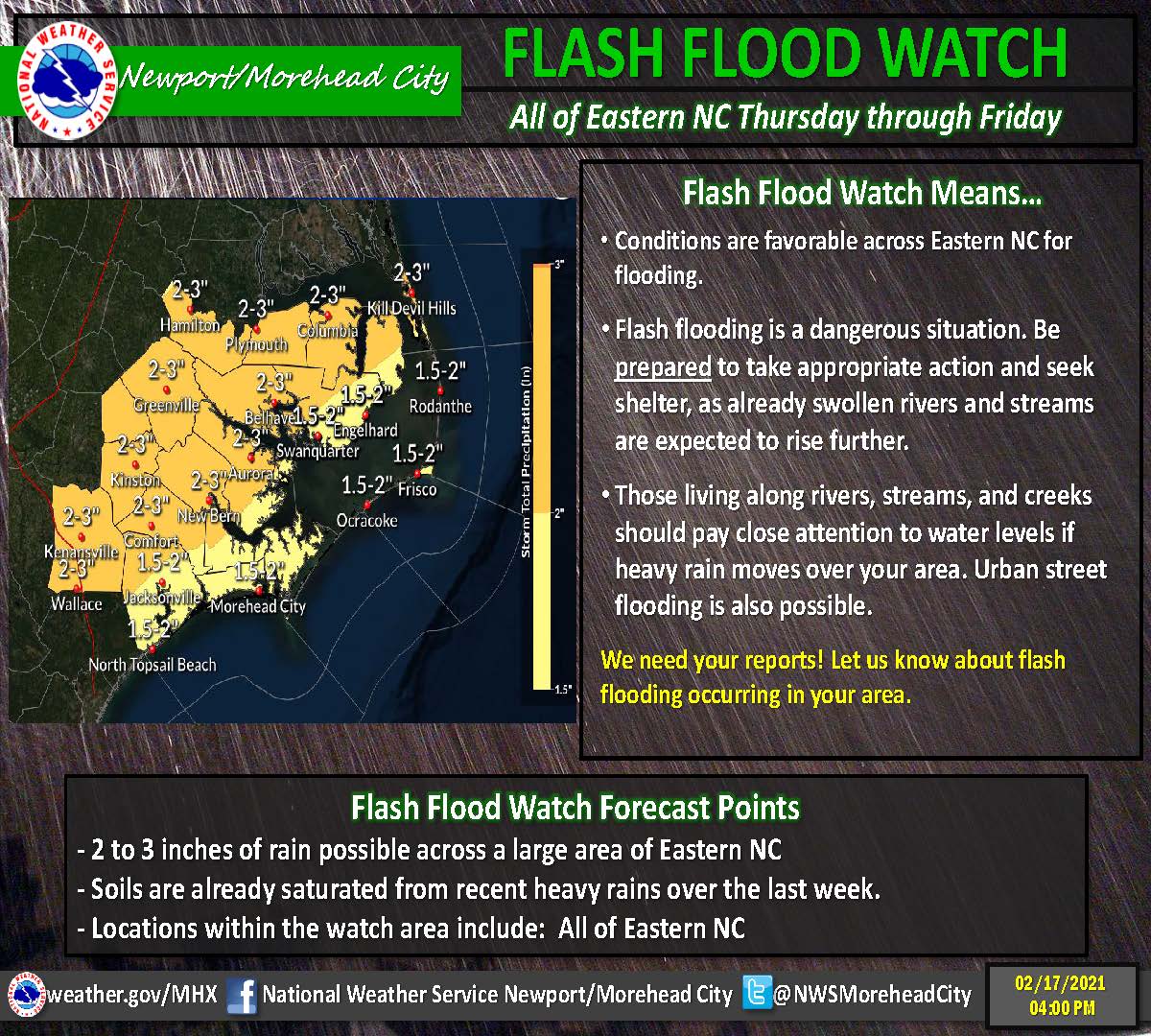
The National Weather Service out of Newport/Morehead City forecasts that with the incoming ice storm, periods of rain combined with already saturated soils and rivers and tributaries already in flood stage, will result in additional river rises and flooding beginning Thursday, and lasting through Friday, before rain ends by early Friday evening.
Occasional heavier rain bands could lead to localized flash flooding. See graphic.
As power outages are expected, Gov. Roy Cooper today issued a State of Emergency and ordered transportation waivers to speed help to areas that may experience power outages.
In a statement issued Wednesday, Cooper said this storm will bring significant icing that’s likely to result in many fallen trees and power lines.
“This forecast for icy weather is a real threat for widespread power outages especially in the northern, western and Piedmont counties,” he said.
These areas, especially north and west, could see between one-quarter and one-half inch of ice or more. Power outages are common with as little as a quarter-inch of icing on trees and power lines.
Weather Underground forecasts rain to begin around midnight tonight with a high Thursday of 55 degrees and a low of 46.
Ocrafolk artisan booths typically situated along School Road and Howard Street during the Ocrafolk Festival will be relocated to the Berkley Manor for this year’s scaled back festival. Photo: C. Leinbach
To catch up on Ocracoke news and much more, click here
The Ocrafolk Festival this year will be scaled back, relocated to the Berkley Manor grounds and is seeking local and regional artisans to sell their work.
Musician lineup, sponsor and ticket info will be announced soon.
Ocracoke Village received significant damage from Hurricane Dorian on Sept. 6, 2019, and reconstruction is still underway at Ocracoke School, the Ocracoke Methodist Church and Howard Street.
That’s why the festival this year will be centered around the Berkley Manor property near the National Park Service parking lot, which is where the festival originally began in 2000.
Because the COVID-19 pandemic is still a concern, the festival will operate on half-size audience capacity and half-budget, and will practice pandemic safety protocols, David Tweedie, festival executive director, said in a press release.
“Many of our Ocrafolk Festival attendees are in the highest risk category for the coronavirus,” he said. “We want to make sure that everyone stays healthy, and that we do our part to help control this health crisis so that we can look forward to many future years of gathering under the live oaks for great performances.”
Using COVID-19 safety guidelines and regardless of the status of vaccines, all participants and attendees will be required to wear face masks covering nose and mouth.
In the performance areas, access will be restricted to a set number of people and all seating will be reserved using safe distancing protocol.
The Artisan booth areas will be adjacent to the performance areas. So, you will be able to hear the music, but artisans won’t be able to enter the audience areas unless they have a reserved ticket and seat for the specific performance time.
Since artisan booths will not be located within the restricted seating areas, shoppers will be able to access your booth even if they don’t have an admission ticket.
In past years, all artisans received passes to wander the performance grounds freely. Due to COVID-19 safety guidelines and restrictions this year, admission to performance areas will be restricted to audience members who have purchased reserved tickets and have received assigned seating for specific times.
Artisans are juried and selections of the artisans will reflect the festival committee’s desire to exhibit quality and variety. Applications are due by March 15. To access the application, click the Ocracoke Alive website here.