The magic of Ocracoke begins on the Hatteras ferry. Photo: C. Leinbach/Ocracoke Observer
Ocracoke Access Alliance to discuss the future of ferry service, including tolls & the impact to Ocracoke, at 7 p.m. Tuesday, March 31, in the Community Center.It will be livestreamed on the OCBA Facebook page.
By Connie Leinbach
Members of the Ocracoke Access Alliance are working on a proposal on the future of ferry service, including tolls and the impact to Ocracoke, to present to the North Carolina General Assembly this spring. This will be discussed at a community meeting at 7 p.m. Tuesday, March 31, in the Community Center,
In their budget last year, the Senate included a toll on the Hatteras ferry, but the House did not have that in their budget.
Since neither budget has passed, the state has been operating on last year’s budget, but that may change in April when the Legislature reconvenes.
Bob Chestnut, chair of the Ocracoke Civic & Business Association, reported at the March 17 meeting that the OAA is working on a plan to stop this yearly fight regarding tolls.
That plan will include a mechanism to exempt permanent island residents from having to pay the toll.
“If we come up with a reasonable plan for a visitor toll, we could leverage that for adequate funding for the ferries,” he said. “We need to buy more ferries.”
The toll should be designed to meet the ferry replacement plan need to cover the 20% match getting federal funding would require, he said. Toll revenues could go into a fund for that purpose.
There are a lot of issues surrounding tolls and their implementation, he said, but those details aren’t the focus just yet.
“Priority pass issue will be addressed later,” he said. “Right now we want to make sure we have a ferry, not who gets on first.”
Part of the plan the OAA is working on and which was discussed at a community meeting March 31 are as follows:
The Ferry Division needs at least $85.5 million a year for operations, but this needs a caveat for rising fuel prices.
It needs $69 million to address the backlog in ferry maintenance.
Establish an annual pass for all ferries; change name from “commuter pass.”
The ferries are a marine highway and thus residents should not have to pay to go home.
Take vessel replacement out of the State Transportation Improvement Program (STIP). This NCDOT program identifies the construction funding and schedule for state transportation projects over a 10-year period. NCDOT updates the STIP approximately every two years.
The OAA is working on how much to recommend to the state legislators for a toll on the Hatteras ferry, but there’s a possibility of doubling the tolls on the Pamlico Sound ferries.
“The Senate has proposed a $20 price on the Hatteras ferry, but others have talked about making it $10 each way,” Chestnut said.
The Senate’s budget also includes doubling the toll on the Ocracoke-Swan Quarter route from the current one-way rate of $15 fee to $30.
The prospect of a toll on the Hatteras ferry, which is free and is the most used in the system, has been dormant since 2016 when the legislature’s spending plan excluded a toll on the Hatteras ferry.
But last spring during budget talks, the N.C. Senate’s budget proposed doubling the rates on the Ocracoke long-route ferries and the passenger ferry and adding tolls to the Hatteras-Ocracoke, Currituck-Knotts Island, and two other routes.
In my opinion, the greatest strength of democracy is its ability to not just tolerate peaceful dissent, but to encourage it. Peaceful dissent provides definition to the problems we face as a nation. It brings clarity to issues that confound us and allows all voices to be heard in that quest. It facilitates our ability to flag injustice – knowing, as MLK reminded us, that “an injustice anywhere is a threat to justice everywhere.”
As I write these words, the rights and freedoms secured by our forefathers and memorialized in the Declaration of Independence, the Constitution, and its Bill of Rights are in clear and present danger.
We all see it happening day after day — slowly but painfully deliberate; the tragic erosion of our long held American ideals. Each of us needs to decide what we are going to do about it. What role will you play in helping to preserve the freedoms many of our forefathers fought for and died to secure?
Just how valuable is the liberty and democracy you have enjoyed and probably taken for granted most of your life? What will you do to return basic human decency to our government and our nation?
Trust me, I am struggling with the same questions right now.
In “The American Crisis #1” (Dec. 23, 1776), written in the second winter of our revolutionary war when things looked utterly hopeless, Thomas Paine reminded us in powerful words that freedom and liberty come at a cost, and no true patriot should ever ignore this reality:
“THESE are the times that try men’s souls. The summer soldier and the sunshine patriot will, in this crisis, shrink from the service of their country; but he that stands by it now, deserves the love and thanks of man and woman. Tyranny, like hell, is not easily conquered; yet we have this consolation with us, that the harder the conflict, the more glorious the triumph. What we obtain too cheap, we esteem too lightly: it is dearness only that gives everything its value. Heaven knows how to put a proper price upon its goods; and it would be strange indeed if so celestial an article as FREEDOM should not be highly rated…”
Paine was imploring his countrymen to get into the fight for America’s revolutionary cause and stay the course no matter how bleak things appeared. He understood that freedom, liberty, the right to representation, and the preservation of human rights are priceless gifts worth protecting at any cost.
He went on to plead that, “If there must be trouble, let it be in my day that my child[ren] may have peace.” Tacitly, he acknowledged what we all know — that our unique freedoms and the blessings of liberty must be secured for future generations.
Peggy Noonan, the gifted columnist (and presidential speech writer for Ronald Reagan), once wrote an op-ed piece (circa November 2002) about the dilemma of honoring one’s principles and maintaining one’s values in trying times. She astutely noted that it is easy to have “principles” when there is nothing at stake for doing so.
However, there are times when a heavy price must be paid for where you stand, and that is not necessarily a bad thing.
Steadfast adherence to one’s values and principles in the darkest and most trying times is what we all recognize as integrity. And while many assert that their personal integrity is something they would never compromise, we often see that commitment flounder and fail as the price for doing so rises.
So, the real question for all of us to answer — right here and now — is what is the true measure of our devotion?
How high of a price are we willing to pay to stand fast on the principles we define as essential to maintaining the democracy and constitutional form of government we profess to honor and love? What sacrifices are we willing to make for the cause of human rights?
Will we sail passionately and confidently into this storm not knowing the outcome of the maelstrom because it is what we know we must do, or will we instead strike sails and seek safe harbor?
Will we be just “fair-weather friends” to our country and our Constitution? As our democratic ideals and basic human decency are threatened with extinction, will we be merely “summer” citizens and “sunshine patriots”?
The time to define what price you are willing to pay is NOW!
Every American who cherishes freedom, democracy, and human rights must weigh anchor and get into this fight.
We know this will be a lengthy, uncertain, and costly battle, but it must be undertaken. We love this country too much to choose otherwise.
May God grant each of us the strength, courage, and fortitude to set our personal price high enough so that it honors the original measure of devotion given by so many in providing us our liberty, our democratic ideals, and our constitutional republic.
Captain John W. Rolph, JAGC, USN, describes himself asHusband, Father, Son, Brother, Veteran, All-Seasons Citizen/Patriot. He served as both an enlisted man and an officer in the U.S. Navy during a 35-year career. He served as an officer in the Judge Advocate General’s Corps of the U.S. Navy from 1982 until 2008.
The rebuilding of Jolly Roger progresses. Photo: C. Leinbach/Ocracoke Observer
Monday, March 23: Ocracoke Alive: Spanish/English Coffee hour, 8:30 to 9:30 am.
Ocracoke Alive: Envisioning the future of Ocracoke, the first of eight discussion-based, creative workshops about the island’s long-term future, with Hannah Aronson, a master of city planning student at Massachusetts Institute of Technology, 6 to 7:30 pm. Deepwater Theater.
Ocracoke Alive: ESL English/Spanish, 7 pm. Ocracoke Community Library
Tuesday, March 24: Ocracoke Alive: Chinese acupressure for self-care with Ann Ehringhaus (Session 1), 4 pm. Deepwater Theater
Ocracoke Alive: Yoga in Spanish, 7:30 pm. Deepwater Theater.
Wednesday, March 25: Ocracoke Alive: Yoga in Spanish with Sarah Shellow, 8:30 to 9:30 am. Deepwater Theater.
1718 Brewing Ocracoke: Island Trivia, 6 to 8 pm
Ocracoke Alive: Oil painting with Durham artist Justin Leitner (session 1), 6-8 pm. Deepwater Theater.
Thursday, March 26: Ocracoke Alive: 9:30am – 10:30am. Ukulele/Guitar with Lou Castro. Deepwater Theater.
Ocracoke School Varsity baseball game at home vs. Bear Grass. 4 pm. Community Ballfield.
Ocracoke Alive: Latin cardio dance class with Arturo. 6 pm. Community Center.
Ocracoke Alive: Oil painting with Durham artist Justin Leitner (session 2), 6-8 pm. Deepwater Theater.
Friends of Ocracoke Library: Annual meeting with crime and mystery author Stacy Woodson. See flyer below.
Friday, March 27: What’s Happening on Ocracoke on WOVV 90.1 FM: Interview with Hannah Aronson, the MIT student doing the “Envisioning the Future of Ocracoke” workshops. 11:30 am.
Ocracoke Alive: Ocracoke Alive: Chinese acupressure for self-care with Ann Ehringhaus (Session 2), 4 pm. Deepwater Theater
Ocracoke Alive: Learn traditional Ocracoke Square Dance at 7, then participate in the dance at 8 pm. Ocracoke Community Center.
Saturday, March 28: No Kings rally, noon. NPS Visitor Center at ferry docks.
Memorial service for Islander Fletcher O’Neal, 1 pm. Ocracoke Life Saving Church. Meet with family, 2-3 pm. Community Center
Ocracoke Preservation Society fundraising art auction, 3 to 5 pm. OPS museum, 49 Water Plant Rd.
1718 Brewing Ocracoke: Kate McNally, 7 pm
Sunday, March 29: Church services: |Ocracoke United Methodist Church, 11 am Ocracoke Life Saving Church, 11 am Stella Maris Chapel: Sunday Mass time at 4:30 p.m. unless otherwise noted. Go to Masstimes.org and type in the zip code 27960 but refresh your browser for it to work properly.
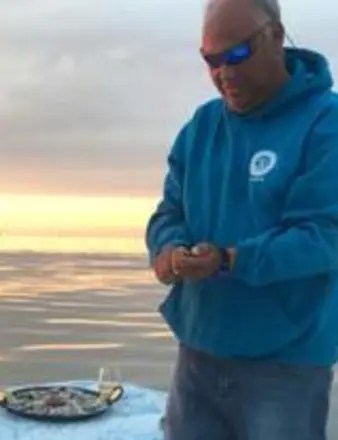
Ocracoke native David Fletcher O’Neal, known as Fletcher, 51, passed away peacefully on March 18, 2026, in Norfolk, Virginia.
Born on February 20, 1975, in Newport News, VA, Fletcher lived a life deeply connected to the waters and the Ocracoke community.
Fletcher dedicated many years as an engineer with the NCDOT Ferry Division. After his retirement, he pursued his passion for the sea as an oyster farmer and an avid waterman, and he cherished his time on the water.
His love of farming oysters and boating was well known among his family and friends. He was actively involved in the Shellfish Growers Association and the Ocracoke Working Watermen’s Association.
Fletcher is preceded in death by his beloved son, Henry O’Neal; his mother, Doris Kathryn Hoggard O’Neal; his paternal grandparents, David and Peggy Ann O’Neal; his maternal grandfather, F.C. “Hoagie” Hoggard; and his aunt, Jean Williams.
He is survived by his maternal grandmother, Merian Hoggard; his father, David Farrow O’Neal, Jr.; his daughter, Maranda O’Neal; his four sons, David Hunter O’Neal, Ethan O’Neal, Brandt O’Neal, and William O’Neal; and his grandson, Dakota Barnett. He also leaves behind his sister, Rachel O’Neal, and her son, Austin O’Neal; his aunt, Sharon Justice, and his uncle, Vince O’Neal (Sue); his cousins, Eric Williams (Diana and their daughter, Emma Jean Williams), Robbie Lewis (Claudia and their daughter, Camryn Lewis), and Katie Brown, Carson O’Neal, and Noah O’Neal, who will fondly remember him.
A funeral service to honor Fletcher’s life will be held at 1 p.m. on Saturday, March 28, in the Ocracoke Life Saving Church. Following the service, the family will greet friends and relatives at the Ocracoke Community Center. A private burial will take place at the Ocracoke Community Cemetery.
Twiford Funeral Homes, Outer Banks, is serving the O’Neal family. Condolences and memories may be shared at www.TwifordFH.com.
His … name was Jubal, he was the father of all those who play the lyre and pipe. Genesis 4:21 Jubal – the first musician
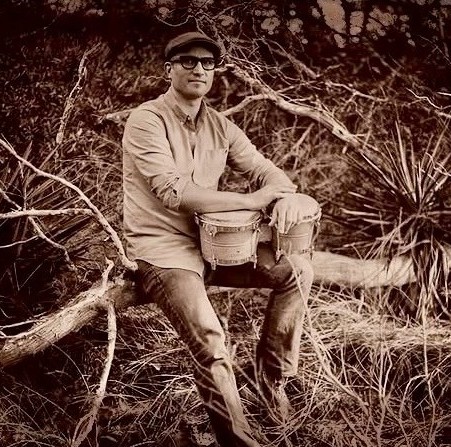
Former Ocracoke Islander Jubal (Kennedy Patrick-jubal) Creech died on March 11, 2026, after a two-year struggle with cancer and complications.
He was a son of the late Merle Smith Davis and James Edward (Jimmy) Creech of Raleigh and stepmother, the late Chris Weedy.
Jubal was born on Aug. 7, 1972, in Raleigh. At the age of 10 months, he moved with his family to Ocracoke Island where he spent the next eight years of his life.
He then moved to Warsaw, North Carolina, where he discovered his musical passion for drums, playing in the James Kenan High School marching band. It was during a performance of the Chuck Davis African American Dance Ensemble at the school that his passion became a love affair with hand drumming.
From Warsaw, in 1987, Jubal moved with his family to Raleigh where he graduated from Needham Broughton High School in 1990.
Over the years, Jubal traveled with his family to France, China and Hong Kong. Later, he traveled to Gambia and lived in Haiti where he studied techniques of hand drumming from Gambian and Haitian musicians.
He was multi-talented. In addition to being an accomplished percussionist, with both drum sets and hand drums, he played the ukulele, was a poet, songwriter, massage therapist, artist, storyteller and teacher of English as a foreign language.
Jubal lived in Asheville and Raleigh, playing with local bands in each.
In Raleigh, he played with the Chuck Davis African American Dance Ensemble, and for the Paperhand Puppet Project and the Raleigh Little Theater.
He lived the greater part of his adult life on Ocracoke where he played with local bands, including Molasses Creek. He hosted Jubal Jams, a weekly show on WOVV, the island radio station. He is remembered on the island as one whose hands and heart brought vibrant and magical energy to his music.
As one who taught how to listen to rhythm, to life, to oneself. As one who carried a quiet depth, with always more beneath the surface – more joy, more insight, more pain and unyielding truth. That depth was part of his gift, part of what made him so human, so real and so unforgettable. As one who had a humble love for all people, a gentleness that was there from the earliest days, moving through the world with kindness, openness and grace.
In 2017, Jubal moved to Chiang Mai, Thailand, where he lived until his death. There, he played with local bands and taught English to Thai and Chinese students, as well as percussion and ukulele. He especially enjoyed working with children.
His Thai friends remember him as a beautiful soul who lived authentically, a kind soul, one with compassion for the underdogs with a strong moral compass and dry wit, a genius musician, a sweet man, a generous spirit, and a lovely creative gifted man, sensitive percussionist, great group and community workshop leader who played and lived and loved with a beautiful sense of wonder.
Jubal’s ashes will be scattered on Ocracoke Island, the home he never truly left. His rhythm lives there – in the bird’s wings against the backdrop of the sunset over the sound, in the wind through the live oaks, in the pounding rain of a summer squall and in the quiet spaces between heartbeats.
In addition to his father, he is survived by his stepfather, Donald Davis (Ocracoke); step-sister Natalia Weedy (Durham); aunts Alice Creech Wilson (Raleigh) and Frances Creech Allen (Goldsboro), and cousins Susie Allen Daniels (Goldsboro) and Robert Allen (Wilmington).
Jubal’s birth announcement read:
New life,
Tender,
Small and so grand,
From life-loving
Is this spirit
Born of woman-man.
Keeper of some future’s history,
Nature’s miracle of hope,
Truth veiled in mystery:
Sunshine felt …
Breath drawn …
Cries breaking
From Life’s fleshed music …
And, we, this day
Have given New Life, New Spirit, New Hope, New Music
A community meeting to discuss the future of ferry service, including tolls and impacts to Ocracoke residents, will be held at 7 p.m. Tuesday, March 31. Both meetings will be in the Community Center.
After a quiet but cold and windy winter, Ocracoke, with its usual mix of optimism and anxiety, is preparing for the tourist season.
The island’s economy depends on visitors—overnight guests and day trippers alike—yet the very conditions that make Ocracoke special also make it difficult to sustain the workforce and infrastructure the tourism engine requires.
This year, some long‑brewing challenges are converging.
Housing Businesses and essential services are all seeking staff, but finding a job on Ocracoke has become far easier than finding a place to live.
Weekly rentals have eaten into the stock of seasonal and year‑round housing.
Workers who move here for a season—or stay to build a life—are hard pressed to find housing.
With less staff, visitors may encounter stores with reduced hours and longer lines at restaurants.
It’s hard for us to imagine how local or state government could help through tax incentives, zoning, deed restrictions or public‑private partnerships. But if anyone thinks they can help, please let the community know.
Property owners could do cost analyses to determine whether converting a weekly rental to a year-round lease would be worthwhile and help the local workforce.
Access Getting on and off the island is another major issue.
Ocracoke’s ferries are not a convenience; they are the island’s lifeline and that lifeline has become increasingly strained and uncertain.
Mechanical issues, staffing shortages, budget pressures and an aging fleet have made ferry service less predictable than anyone would like.
An unreliable ferry schedule along with long lines on both sides of the Hatteras ferry route do more than frustrate visitors. They undermine businesses who must choose how much to invest, how many people to hire and how long to stay open.
Islanders are wary of the North Carolina General Assembly, which continues to kick the budget down the road.
The state Senate has proposed a toll of $20 each way to cross the Hatteras Inlet. No tolls are in the House version, and the budget will once again be debated this spring.
A toll for the Hatteras Inlet ferries might look like a straightforward revenue fix on paper, but for day visitors, it could be the difference between coming and staying home.
If tolls are seriously considered, the state must evaluate the economic impact and the cost of installing infrastructure to collect those tolls.
Creative solutions—tiered pricing, local passes, or seasonal structures that spare shoulder‑season visitors—should be part of any conversation.
Island voices must be central in that process.
A bright spot: the passenger ferry Against this backdrop, a reliable passenger service can move people more efficiently, relieve some pressure on vehicle ferries, and offer a more predictable experience for visitors who are willing to park and walk.
For Ocracoke’s businesses, the passenger ferry offers several benefits:
– It encourages more foot traffic into the village without adding to parking congestion.
– It gives day trippers greater certainty about getting on and off the island.
– It aligns nicely with the island’s small‑scale, pedestrian‑friendly character.
Living at the edge: storms and NC12 Every new season also brings a reminder of Ocracoke’s vulnerability to the sea. NC12 at the north end of the island is as much a barometer as a highway.
A strong storm or nor’easter can wash out portions of road, severing access for days because it necessitates suspending the ferry. This can strand visitors, affect deliveries and cast a shadow over the island’s reliability as a destination.
Flooding, overwash and pavement damage by these storms have increased in the past several years. One big storm could breach the island, shutting down north-end access for a long time or possibly permanently.
While there are no simple or inexpensive solutions, if more people in the community attend these discussions, there may yet be a plan.
Hyde County Manager Kris Noble and Ocracoke’s County Commissioner Randal Mathews have been working on these access issues—talking to legislators, attending regional planning meetings–that are giving Hyde County a seat at the table.
Last year, Justin LeBlanc, a professional lobbyist, formed the Ocracoke Access Alliance (OAA), a nonprofit, to lobby the Legislature for adequate funding for ferries and the north end access issues.
The OAA supplements the county’s efforts to apprise lawmakers of Ocracoke’s needs. They have reported at the monthly Ocracoke Civic & Business Association (OCBA) meetings and will continue to do so.
Discussions among islanders and scientific studies are underway to find solutions that go beyond replacing sandbags and plowing the sand and water off the road.
“Envisioning Ocracoke’s Future,” a Monday night workshop in the Deepwater Theater hosted by Ocracoke Alive, is going on through March.
While there are no simple or inexpensive solutions, if more people in the community attend these discussions, there may yet be a plan.
Community meetings are listed on page 12 in the print issue and online weekly.
Joseph Contreras, right, plays for the boys’ middle-school team. Photo by Corey Cutright
As today (March 19) begins the annual March Madness basketball championship, we offer this assessment of the recently ended Ocracoke School basketball season.
By Peter Vankevich
Over the winter, the Ocracoke Dolphins basketball teams concluded a challenging yet promising season. The well-attended games were broadcast by WOVV 90.1 FM, the island’s community radio station.
Both varsity teams ended the season with a 3–12 record. The boys’ middle-school team finished at 4–5, while the middle school girls had a 3–5 record.
All varsity players, except one graduating senior from the boys’ team, are expected to return next season.
Despite the losing records, the coaches praised the players, highlighting each team’s growth and never-give-up attitude and expressed optimism for the next year.
Boys varsity: “A rebuilding year In his first season, Coach Luke Davis guided a young team through a rebuilding year. The team had lost seven talented seniors to graduation. Following point guard senior Noah Turner’s departure to a season-ending injury, the starting lineup featured two freshmen, two sophomores, and a junior, with almost no bench support.
“These players needed to be in top physical condition and play intelligently,” Davis said. “They were competing against teams who had four years of varsity experience and were bigger, faster and stronger. Throughout the season, we had to mature and develop rapidly.”
Team members were Yael Mendez-Amador (Jr), Duncan McClain (Fr), Mau Guerrero Perez (Jr), Roger Suazo Gonzales (Sr), Javier Trejo (Fr), Brian O’Neal (So) and Uriah Johnson (So).
Davis noted significant improvement throughout the season. He said that the team met its most important goals and focused on growth rather than wins and losses.
They never gave up Athletic Director Mary McKnight said the Lady Dolphins varsity record doesn’t reflect the team’s grit. She was proud of their perseverance, playing hard through every game to the end of the fourth quarter. Four of those losses were close games.
Stats coach Jack Keys noted that even though they did not produce as many wins as they would have liked, they still managed to learn and develop their team and individual skills and put forth 100 percent effort in all of their games.
“With a team of only seven players, they worked hard in practices and performed the best they could when they were clearly outnumbered by other opponents having sometimes more than 12 players,” he noted.
The team members were Jenny Garcia (Fr), Lilly Pacanins (So), Essie O’Neal (Jr), Olivia Tinney (Fr), Dora Goff (Jr), Jami Martinez (Jr), Denisse Rubio (So) and Stephanie Flores Esparza (So), coached by Head Coach Salomon Vergara-Cobos and assistant coach Lucy O’Neal.
Martinez led the team in scoring with 130 points (8.1 pts per game), followed by Rubio with 109 points (6.8 points per game) and led the team in rebounds with 99, followed by Esparza Flores with 93.
Deinisse Rubio drives for a layup shot. Photo by Corey Cutright
Middle-School Boys: Strong finish and growing confidence Coached by Carson O’Neal and Matt Tolsen, the middle school boys’ team finished 4–5, winning three of their final five games. O’Neal noted how they improved significantly in defense and rebounding.
“They really hit their stride after the Christmas break,” O’Neal said. “Sharing the ball and ball movement was something the team did well most of the season, and the biggest area of improvement was growth on defense and rebounding, which really helped the team form into shape and get some wins down the stretch of the season.”
The team delivered several highlight performances, including sweeping both Mattamuskeet games, led by 8th grade captain Joseph Contreras, who scored 24 and 12 points in those contests. O’Neal also noted a home win over the Hatteras Hurricanes sparked by 7th grader Kyler Luna, who poured in 13 points.
Middle-School Girls: Big roster, even bigger growth The middle-school girls, coached by Mary McKnight with assistants Katie Rooney O’Neal and Frank Pacanins, finished 3–5. Despite the record, the coaches focused on fundamental skills, leadership, and mastering the “inner game.”
Managing a large roster of 17 players, the coaches praised the team’s heart, cooperation and culture, which bodes well for the program’s future.
With both varsity teams and the middle-school programs poised to return nearly all of their players, the foundations laid this year are expected to benefit the Dolphins in future seasons.
Brian O’Neal, left, shoots for the Dolphins. Photo by Corey Cutright
The Ocracoke Civic & Business Association at 6 p.m. tonight (March 17) will discuss the recent Ocracoke Access Alliance trip to Washington, D.C., and a community meeting on ferry tolls will be held at 7 p.m. Tuesday, March 31. Both meetings will be in the Community Center.
Aerial view of Ocracoke Island. Photo: C. Leinbach
By Randal Mathews
It was the result of growth and development that the local telecommunications corporation decided to transfer me to Ocracoke from Hatteras Island in 1983.
The village of Ocracoke had 493 landlines which eventually grew to more than 1,000 over my 40-year career. The village of Ocracoke had the highest growth rate proportionally of any exchange in what was the Rocky Mount district.
Many of the old timers appreciated me and told me so many times and landlines were the only real time communication afforded to residents and businesses.
It was clear that Ocracoke was becoming more popular and new business expanded the local job market offering locals more opportunities.
A relatively new water system and a state funded health center were examples. The ferry system was receiving funding that enhanced travel as companies like UPS, FedEx and Estes trucking were not coming to Ocracoke on a regular schedule.
Ridership on the ferries increased to a half million people by the early 2000s. There have always been comments about the good old days when life was simpler, and access was limited, but life here was challenging with no EMS, solid waste service, and no island doctor as examples.
I appreciate that we have a full-time, fully staffed health center and the first state licensed reverse osmosis water plant.
Our hardware and grocery stores had limited supplies and vendors were not eager to take the extra time to make a round trip to Ocracoke.
Housing was limited and it took me six months to find someone that would rent to me, and that is still an issue. I commuted from Buxton daily and 12-hour workdays were normal. But I quickly fell in love with the people and lifestyle of being a true islander.
I have always appreciated the full-on tourist season during summer and the quiet isolation during winters.
It’s really the best of both worlds but it’s not for everyone. Ridership on the ferries has slowly decreased by 30% in the last 25 years due to many factors including a longer route to Hatteras Island and lack of funding from our legislature in recent years.
As Ocracoke’s commissioner since 2020, I have had to learn how to navigate the political world, and I, along with other county officials, have made some important connections to the purse-string holders in Raleigh. These connections are crucial going forward.
People have asked me: What are we going to do about parking? What are we going to do about the golf carts? What are we going to do about all of the campers/trailers?
These are important issues. But right now, north end erosion and adequate funding for the ferries are foremost, and plans of action are formulating that will affect our island.
To that end, I encourage all islanders come out to the OCBA and OAA meetings to have their voices heard.
Relatively speaking, you will never be stuck in traffic at rush hour like so many overdeveloped municipalities. Golf carts create a safer slower street environment, and our seasonal tram complements the passenger ferry and decreases the environmental impact of more vehicles.
Parking can be a mess, but tourism is the main industry here and let’s not discourage travelers or business at our many fine restaurants and retail businesses.
Ocracoke will always have limited access. So, in some ways that’s a blessing because the folks that eventually get here truly love our island and have taken the time and expense to be able to spend time here.
We are unique to many tourist destinations on the east coast and that will always be.
Our growth will be limited as 1,000 acres of village will not expand into the surrounding park and everyone should be grateful to live next to the nation’s first national seashore park.
Let us all appreciate that change is inevitable and that Ocracoke and the people who live here or visit are a special breed that go the extra mile to be here, and that, my friends, will never change.
Ocracoke resident Randal Mathews is chair of the Hyde County Board of Commissioners.
Roundup and other glyphosate‑based weed killers are a common tool for farmworkers, landscape contractors and homeowners. A new Duke study raises questions about possible kidney risks from long‑term, low‑level exposure. Credit: Rose Hoban/NCHN
As 80-degree weather and daffodil and Bradford pear blooms purge winter from North Carolina landscapes, weekend gardeners are springing into action. Bags of grass seed, mulch and compost are hot commodities at local garden centers this time of year, and yard-sprucing plans revolve around questions like whether that shady corner gets enough sun for a flowering shrub — and what to do about weeds.
While there are several options for managing weeds, including pulling by hand and mulching, some may reach for Roundup, a popular weed killer whose active ingredient is glyphosate. Long used by farmworkers and landscape contractors — and, in smaller amounts, by homeowners — the chemical has drawn growing scrutiny from scientists who say repeated exposure may come with health risks for the people who handle it most.
Duke University researcher Nishad Jayasundara and his students conducted a study published last month that shows how, under certain conditions, persistent exposure to low levels of glyphosate, 70 times below what is currently permissible in the drinking water, could be harmful to kidneys.
During the study, adult zebrafish were exposed for weeks to low levels of glyphosate and a mixture of metals at concentrations allowed in drinking water. In earlier work, Jayasundara and colleagues found those same levels in drinking water from regions with high rates of advanced kidney disease that can’t be explained by typical risk factors. In the new study, even these low exposures led to clear signs of kidney damage, including impaired kidney function, structural injury to kidney tubules and disrupted energy metabolism in kidney cells.
Zebrafish are a commonly used animal for modeling how chemicals and pharmaceuticals affect humans.
The findings suggest that people who rely on drinking water contaminated with both glyphosate and certain metals may face an elevated risk of chronic kidney damage, and that this combined exposure may be more harmful than either contaminant alone.
“We were able to show that really low levels of glyphosate, with long-term exposure, interact with metals in ways that can compromise kidney function,” Jayasundara said. “We saw those same levels of glyphosate and metals in drinking water from farming communities around the world, where farmworkers are drinking that water and showing high rates of kidney disease without clear explanations.”
The findings are especially relevant for people who work with glyphosate regularly, such as farmworkers and landscape contractors, who may be exposed far more often than the average homeowner. Experts say the research is also a reminder that anyone using weed killers around the house should handle them carefully and consider safer alternatives when possible.
The research comes amid renewed controversy over glyphosate, after a key 2000 study backing its safety was retracted when researchers’ undisclosed ties to Monsanto came to light, amid “serious ethical concerns,” fueling questions about regulators’ reliance on the industry-backed research. At the same time, President Donald Trump has signed an executive order declaring glyphosate-based herbicides “critical” to national security, directing agencies to protect their production and extending some liability protections to manufacturers.
Minimal protection for farmworkers
In fiscal year 2023, the United States issued more than 300,000 H‑2A visas to temporary agricultural workers, according to U.S. Department of State data. In 2022, North Carolina employed more than 25,000 farmworkers through the temporary visa program.
Although farmworkers receive training on how to safely apply herbicides and pesticides, the instruction doesn’t go far enough, said Leticia Zavala, an organizer for It’s Our Future, an organization that provides support for H‑2A workers.
“There are training requirements for [chemical] applicators, and there are training requirements for workers that work in fields where [they] are being used,” Zavala said, “but they’re very minimal and not enforced.”
“We see a lot of workers who are given a video, for example — it’s like a 30‑minute video — but they don’t know who to call or what to do if they feel like that exposure puts them at risk,” she added. “Pesticide applicators also get training, but they don’t get the protective equipment, or they don’t know what they’re actually spraying.”
Safer options for landscapers and homeowners
Landscape contractors who apply herbicides and pesticides for hire are required to hold a pesticide applicator license, which means completing training, passing a state exam and periodically renewing their certification through continuing-education courses or retesting.
In North Carolina, commercial applicators must first pass a written exam on core pesticide safety and then a second exam in a specialty category such as ornamental and turf or right‑of‑way, according to information provided by North Carolina State Extension. Certification is valid for a limited period, and applicators have to earn continuing‑education credits in approved pesticide‑safety courses to keep it, or else retake the exams when it expires
For homeowners, there is a range of weed control options. The product 30 percent vinegar can be found at local garden centers as well as some big-box retailers. As the name implies, it contains a highly concentrated vinegar (acetic acid) solution, and experts recommend wearing gloves and protective eyewear when applying to avoid skin and eye injuries.
For those interested in weed barriers, newspaper or cardboard can be laid over a bed and then covered with mulch. Given the times we’re living in, old newspapers can be in short supply, so there are also landscape fabrics on the market that serve a similar purpose. In both cases, the materials eliminate or slow weed growth by blocking light and preventing many weed seeds from germinating.
Jayasundara is not calling for occasional users to stop using Roundup or other weed killers that contain glyphosate, he said. Rather, he emphasizes proceeding with caution. “If you have a garden patch and you’re using glyphosate every several months, your exposure risk and your health risks are likely low.”
However, if a person has traces of heavy metals — such as cadmium, lead or arsenic absorbed over time from food or drinking water — there’s a possibility that glyphosate exposure, even at low levels, could pose a health risk.
Cadmium exposure can occur through eating such foods as leafy greens, grains and potatoes, as well as from cigarette smoke and, in some areas, contaminated drinking water.
In their zebrafish study, Jayasundara’s team used glyphosate and metal concentrations similar to those measured in drinking water from farming communities, and found that glyphosate increased the amount of cadmium that accumulated in the kidney.
“Cadmium is a really well‑known kidney toxicant,” he said.
Will Atwater has spent the past decade working with educators, artists and community-based organizations as a short-form documentary and promotional video producer. A native North Carolinian, Will grew up in Chapel Hill, and now splits time between North Carolina and New Jersey, where he lives with his wife and two children. Reach him at watwater@northcarolinahealthnews.org
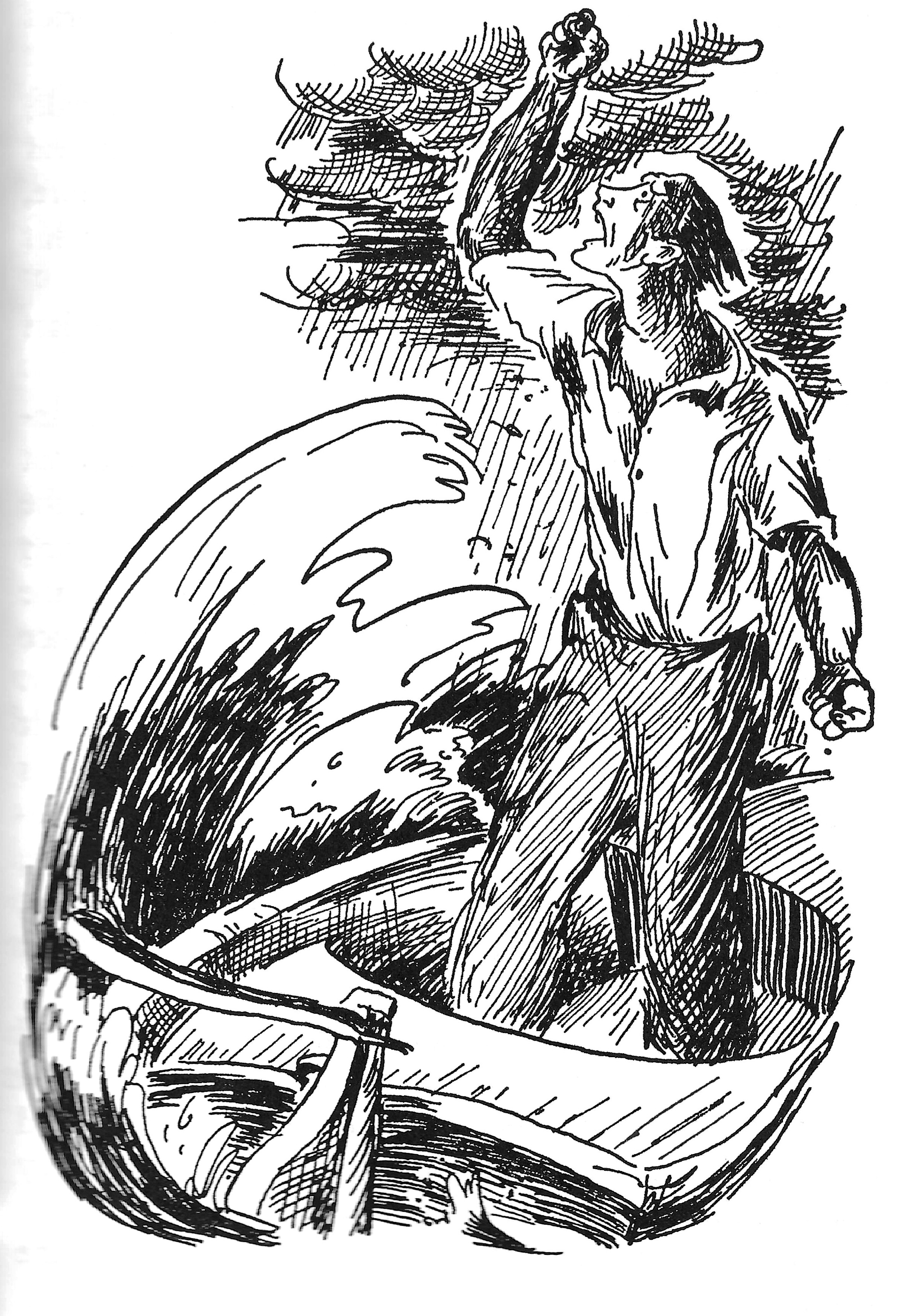
Today, March 16, 2026, has turned stormy, just as it might have been about 200 years agoe when an island character named “Old Quawk” wanted to go fishing and did so despite inclement weather. As Philip Howard notes in his Island Journal: “(Quawk) was a reclusive figure, preferring to live in a small hut made of driftwood and bullrushes about 5-6 miles from the village. No one remembers his given name, but folks called him “Old Quawk” because, they said, he ‘quawked’ like an old night heron.” This poem recounts Old Quawk’s story.
‘Old Quawk’ as depicted by Primrose, who illustrated Carl Goerch’s entry about this Ocracoke Island man in his 1956 book ‘Ocracoke.’
By Robb Foster
March, the ides, of Winter’s end A sorrowed tale will oft portend That Caesar is just one to fall The season, late, had one more squall We stood in awe of dark’ning skies The winter, still, had one reprise The song she sang that day Cimmerian For we, the children, here Silurian We bade the day considered lost For no man, wise, would pay the cost To fish amongst a roiling sound To cast that day, our ending, drowned But on that day one stood too proud Cursing God and Mother loud He left this isle and safety’s sight To save his nets despite this plight Unto his own he stayed up north So rarely would he venture forth He left us here to pine upon Why here, these shores, he wandered on? Bolder he than all of us Above the gale we heard him cuss Raucous wails, the tempest spoke Though, not above this fiery bloke! Some say a pirate, some shipwrecked This Moorish hermit, we suspect These tales as told will have no end The squawking recluse failed to bend For on that fateful mid-March Day We watched the cullion sail away No trace of him was ever found No blighted skiff adrift, the sound Beware the Ides of March, my friend And if you doubt, I’ll swear again Pay heed, old Quawk, we never found This day, the wise, stay island bound.
Robb Foster, who aspires to one day call Ocracoke home, lives in the Shenandoah Mountains of Virginia, where he also finds inspiration for his poetry. He is a talented musician and songwriter and a frequent guest on WOVV, Ocracoke’s community radio.
Quokes Point Creek is the area where Old Quawk fished. Photo: P. Vankevich/Ocracoke Observer