As July 4 approaches, the Ocracoke Volunteer Fire Department urges Ocracoke citizens and visitors to remember that all fireworks are prohibited on the island.
Typically, the Ocracoke Civic & Business Association produces a number of July Fourth events on the island but due to the COVID-19 pandemic restrictions, all of these events, including the professional fireworks display, were canceled.
Nevertheless, that does not mean folks can have their own fireworks displays since any kind of fireworks—from sparklers to bottle rockets—have been banned since 2003 on Ocracoke after some fireworks brought by visitors accidentally caught the marsh on fire near Jackson Dunes.
Dick Jacoby, president of the Ocracoke Fire Protection Association, which is the nonprofit auxiliary of the fire department, said that had the volunteers not contained it, the entire village could have caught fire.
Fireworks pose a danger because of the ever-constant island wind that in the summer blows predominantly southwest, or from the ocean inward. Wind blew embers from those personal fireworks in 2003 into the marsh grasses.
In 2007, fireworks debris from a professional display held on the beach blew onto the grass near the airport also causing a fire.
Information from the N.C. Department of Agriculture and Consumer Services says that even small, legal fireworks such as sparklers, fountains, glow worms, smoke devices, trick noisemakers and other Class C fireworks can be hazardous.
For example, sparklers burn at temperatures above 1,800 degrees Fahrenheit. Glow worms burn directly on the ground near ignition sources.
Wildfires caused by fireworks can be prosecuted under the forest protection laws of North Carolina, and individuals may be subject to reimbursing the costs for fire suppression.
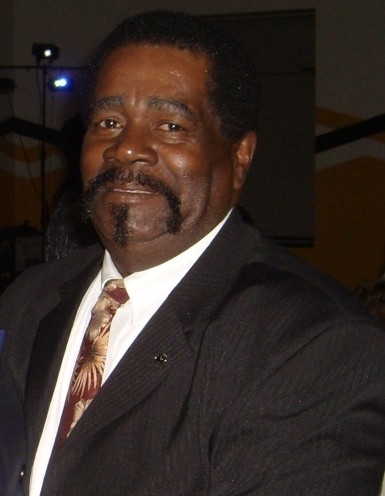
James Roger Topping, the Hyde County Commissioner representing Swan Quarter, died June 29.
He was the husband of Goldie Rickard Topping.
Details as to filling his remaining commissioner term will be announced later.
Known as “Little Brother,” James was born Feb. 20, 1952, and was a son of the late James Delama and Marjorie Sadler Topping.
He was a member of the St. Mary Disciple Church of Christ in Swan Quarter and was a graduate of Mattamuskeet High School.
While still in high school, James began his working career as the first African American guide for Mattamuskeet Lake.
He was employed in the maintenance department for Hyde County Schools for 17 years. He worked part time for the Winterville Police Department in Winterville.
He worked alongside his parents in the family business, Topping’s Lakeside Restaurant and Motel, in the early 1980s to the mid-1990s. He continued the business started by his father, James Topping and Sons General Contractor, until his health declined.
He ended his working career at Hyde County Corrections in Swan Quarter when he retired in 2015.
In 1987, James was appointed to the Hyde County Board of Commissioners as the first African American to hold that position, which he held for 18 months.
In 2018, he was elected to the Swan Quarter commissioner seat.
It was in his nature to help people, and serving on the Board of Commissioners is where he hoped he could help the people of Hyde County the most.
He was an active member of the Hyde County Transit Board, and the Hyde County JCPC Board. He was a member of New Branch Masonic Lodge #785 Swan Quarter, NC. He was a member of the Arabic Order of the Mystic Shrine, Rofelt Pasha Temple No. 175, a member of Holy Royal Arch Masons, and Bright Star of East Chapter No. 74.
“Little Brother,” as he was so well known, loved people. He brought joy to his family and many friends who loved him. He loved to hunt, fish, play cards, talk, joke and laugh with people he had just met. He met no strangers.
In addition to his wife, James is survived by two sons, James Antonio “Boo-Boo” Topping (Rhonda) of Swan Quarter and Gyno R. Topping (Marlene) of Greenville; a daughter, Victoria Mackey Davis (Donavan) of Charlotte.
Three sisters, Mary Topping Gibbs (Wallace), Brenda Topping Murray and Dorene Topping Holloway (Floyd), all of Swan Quarter.
Two aunts: Emma Sadler Blount (Jerome) of Newport News Va., and Florence “Bobbie” Topping of Washington, Beaufort County.
Two uncles: Samuel Sadler of Dallas, Texas, and Clifford Topping (Marie) of Swan Quarter; three nephews: James B. Murray, Wallace “BumBee” Gibbs Jr., both of Greenville, and Phillip “Andy” Holloway (Alishia) of Swan Quarter; a niece, Marjorie Gibbs Bond (Roy) of Elizabeth City; eight grandchildren and five great-grandchildren.
Four incredibly special friends, Richard Spencer of Engelhard; Cecil “CJ” Hardee of Greenville; Maxwell Selby, Jr. of Fairfield and Mark Carawan of Swan Quarter.
A funeral service will be held at 11 a.m., Saturday, July 4, in the Ponzer Community Building.
Friends may visit with the family Friday afternoon from 3 to 5 p.m. at Bryan Funeral Service, Swan Quarter.
A Black Lives Matter march on Ocracoke on June 28 had about 150 participants who walked down Irvin Garrish Highway from Howard’s Pub to Community Square where they heard some speakers and music. Photo: C. Leinbach
Captain Jason Daniels wants everyone to know that the Hyde County Sheriff deputies on Ocracoke are peacekeepers first.
And the Black Lives Matter march at 5 p.m. Sunday, June 28, turned out to be everything he had hoped it would be—citizens exercising their right to peaceably assemble and exercise their right to give their opinions.
Organized by several young people on the island, about 100 people, many of them visitors, walked in silence from the north end of the village to Community Square where they heard a few speakers and some music to show solidarity with protesters around the nation urging inclusion for people of color. Despite some advances in recent decades, people of color still face egregious discrimination nationwide.
Hyde County Sheriff Guire Cahoon, Daniels, and with his deputies watched the rally from across the street.
Before the march began, Melanie Turner, one of the organizers, said the marchers would not chant unless counter protesters began something.
At Community Square, one man began yelling, “All lives matter,” after which, the marchers responded, “Black lives matter!”
Then the instigator and another man got in each other’s faces for a few seconds until someone calmed the situation down before anything escalated.
Daniels said that yelling is normal at any protest.
He did talk to the instigator and the man related that he had just wanted his voice to be heard, which is his right.
“He did not do anything to break the law,” Daniels said about the incident. “If anything got physical, that’s why we were there.”
The deputies preceded and followed the marchers in their cars.
“It’s our job to let them have their walk,” Daniels said, noting that any such march requires a permit. And next week, if a group with an opposing view wants to walk, that’s their right.
He stressed that he wants to keep peace among all on Ocracoke—visitors and residents no matter their color or persuasion.
The island is a small community and many, if not most, know the island’s law enforcement officers. As a result, they are able to diffuse situations that have the potential of getting out of control.
“It’s our last resort to use force here,” he said. “We have very little use of force here.”
Daniels is part of the community and is a talented artist, having been an industrial arts teacher before he became a sheriff deputy. His carvings grace many homes and businesses and he has a thriving sign-making business.
He and his family have lived here for 18 years, and the other deputies live and play here, too.
As police everywhere are under scrutiny, Daniels does not want the island force painted with a brutal brush.
We would love to see everyone take all the nasty talk, particularly on social media, down a notch, or several notches.
George Floyd, Rayshard Brooks[PV1] , Breonna Taylor and others were by no means the only victims.
In 1991, Rodney King was brutally beaten by police officers of the Los Angeles Police Department after fleeing a high-speed chase. The incident was captured on film gaining world-wide attention and four officers were indicted. When the officers were acquitted the following year, a six-day riot in South Los Angeles ensued.
Calling for calm, halfway through, King said, “People, I just want to say, you know, can we all get along? Can we get along?”
Violent responses only add to the fire. Peaceful protests accomplish a lot more towards reconciliation.
Gary Mitchell with Molasses Creek, hit the right tone at the rally performing his song “Can we all agree on love?”
To catch up on Ocracoke news and much more, clickhere
By Peter Vankevich
Ocracoke will get a 4th of July gift as the Ocracoke Express passenger ferry service will begin on Friday (July 3) and will run through Sept. 10.
Gov. Roy Cooper signed off on Senate Bill 570 that approved $1.146 million to lease the M/V Martha’s Vineyard ferry from Seastreak Marine out of New Jersey. This is the same boat used last summer.
The departure times will follow last year’s schedule: From Hatteras: 9:30 a. m., 1 p.m. and 4:30 p.m. From Ocracoke’s Silver Lake Terminal: 11 a.m., 3 p.m. and 8 p.m.
Tickets are $5 one way; $10 per round trip, and $1 per bicycle for each trip. Children 3 and under are free.
Reservations can be now made by calling 1-800-293-3779, or online at www.ncferry.organd clicking on “Online Reservations.” Walk-up reservations are also accepted as long as space is available.
The Ferry Division said in a press release that it will take the necessary measures and precautions in order to protect our passengers and crew from the spread of COVID-19. At press time, the number of passengers permitted to board was not known. Last year, the Express accommodated 150 passengers.
In line with Cooper’s Executive Order 147, all passengers must wear face coverings while on board both inside the seating area and on the deck. Space in the waiting areas will be marked to ensure proper social distancing and hand sanitizer will be at the ticket windows and on board the vessels.
Ferry Division personnel will implement a vessel and facility cleaning regiment with crew sign off sheets.
The passenger ferry is at the Hatteras dock. Photo by Janille Turner
Updated July 2, 2020, with tram service information.
By Peter Vankevich
Gov. Roy Cooper today signed a bill authorizing passenger ferry service between Hatteras and Ocracoke starting in July until Sept. 10. The measure was among 12 bills Cooper signed.
The North Carolina legislature on June 25 approved $1,146,179 to lease, pending completion of a successful route verification, a passenger ferry between Hatteras and Ocracoke. Senate Bill 750, introduced by First District Sen. Bob Steinburg (R-Chowan), passed unanimously, and was sent to Gov. Roy Cooper for signature, which Cooper did today. A launch date is pending.
The bill also includes $6 million for a new heating and air conditioning system and chiller at Elizabeth City State University.
Sixth District Rep. Bobby Hanig (R-Currituck) had introduced the ferry funding amendment in a House subcommittee.
The approval was a bit of a surprise because NCDOT announced on April 28 that it would not be funded this year “due to the impacts of COVID-19.”
The M/V Martha’s Vineyard Express, which served as Ocracoke’s passenger ferry last year, was seen in Coinjock, Currituck County, on Sunday. Photo by Sam Walker
Since the ferry is a go, to prevent the spread of COVID-19, NCDOT will need to determine how many passengers it can safely allow on the boat at a time and encourage people to wear masks and remain six feet from people they aren’t traveling with. Last year, this same boat accommodated up to 150 passengers.
In a joint statement, Hanig and Steinburg said, “We are pleased by the passage of the $1.2 million for the Hatteras-Ocracoke Ferry. Under the best of circumstances, we know that the ferry has been successfully operational. We know that the ferry is critical to Ocracoke as the island has taken a multitude of gut punches, starting with Hurricane Dorian last September. We are hopeful that the operation of the ferry will be a good start to helping Ocracoke heal.”
The free village tram service that ran last summer in conjunction with the passenger ferry will again support the passenger ferry, said Joseph Ramunni, who manages the trams. They will run starting Friday, July 3, from 10:30 a.m. to 8 p.m., he said, adding that zccording to current law, face masks will be required.
The Hyde County commissioners at their April 6 meeting approved the purchase of new trams. Last year, the NCDOT had purchased the trams and leased them to Hyde County for $1, said county attorney Franz Holscher. Now, the county will purchase the trams, thanks to a grant from the Golden LEAF Foundation, but the county and NCDOT will pay equally for the yearly operating costs.
The passenger ferry was introduced in 2019 as a transportation alternative for people traveling between Hatteras and Ocracoke islands with the ferry going directly into Ocracoke village.
Last year, the Ferry Division leased the M/V Martha’s Vineyard ferry from Seastreak Marine out of New Jersey from late May to Labor Day. Reports confirm the same boat as last year will again serve Ocracoke.
More than 28,600 people used it last summer.
With passenger-only ferry in service, the waiting times for the vehicle ferry between the islands were significantly decreased according to Ferry Division statistics, especially by visitors traveling to Ocracoke for day trips.
Hyde County Government Center, 30 Oyster Creek Rd., Swan Quarter.
By Connie Leinbach
Despite back-to-back economic disasters, Hyde County’s 2020-2021 budget maintains about the same revenue and spending level as last year with no new taxes.
Proposed revenues and expenditures of $16.77 million are slightly higher than last year’s budget of $16.71 million.
The Hyde County commissioners will vote on the budget at 8 a.m. Wednesday, July 1, in a meeting televised via Facebook.
While municipalities around the country also are grappling with loss of income due to the COVID-19 pandemic, Hyde County sustained an economic hit following Hurricane Dorian’s devastation Sept. 6.
The recommended budget maintains the same tax rate of $0.77 per each $100 of assessed property valuation, said Hyde County Manager Kris Noble in her budget address.
The estimated total taxable value is $886,461,530, which includes personal property, such as vehicles.
However, the estimated total real property valuation for FY 2020-2021 is down approximately $13,532,252 from FY 2019-2020, with most of that on Ocracoke, Noble said.
“What has changed is that total assessed value,” Noble said during the June 17 OCBA meeting. “We lost about $30 million off of that, and that gave us less money to budget with this year.”
The economic impacts of the COVID -19 crisis are still unknown, she said, and the recommended budget expenditures are cut below prior year levels to balance with the projected decreased revenue estimates.
Her message and budget documents are available on the Hyde County website: hydecountync.gov.
“Although our normal indicators for sales and use tax are not yet published, Hyde County estimates a reduction of 30%, which would result in a budget shortfall of approximately $458,925,” Noble said.
According to her budget message, the proposed budget uses $1,567,542.43 of the fund balance, which is the contingency fund.
Funding for the Hyde County school system will remain at last year’s levels.
The recommended budget allocates funding to continue critical services to citizens of Hyde County at the same level as in the previous year. No services or jobs are cut in this proposed budget.
Hyde County Health Department on Sunday reported two more laboratory confirmed cases of COVID-19
in Hyde County.
That boosted Hyde’s total number of COVID-19 cases as of Sunday to 10, though not all are active.
Though the county has been very fortunate to have only had one hospitalization so far and no deaths, people should remain vigilant in prevention of spread and control measures, according to a press release Sunday afternoon.
Businesses should practice proper protocols for keeping their staff and patrons safe.
The general public, when out and about, should practice the 3 Ws: Wear a mask, Wait 6 feet, and Wash your hands. Individuals who are noted as contacts to positive cases should adhere to the quarantine directives provided by the Health Department to prevent spread.
“Covid-19 is with us to stay,” said Health Director Luana Gibbs in the release. “The best thing we can do as a society is put aside our political views and be neighborly to one another by doing our share to protect one another. It may save a life, or keep someone from hospitalization.”
For updated information of total cases, active cases, recoveries, etc., follow Hyde County on Facebook where an update is posted daily at 3 p.m.
The health department stresses that people should get information from reliable sources, such as:
Smilax in winter. Photo taken at Springer’s Point, Ocracoke, by Ken Moore
By Pat Garber
One day this winter, while searching for cold-stunned sea turtles on the Ocracoke beach, I brushed against the spines of a prickly pear cactus, clambered through a huge mat of scratchy catbrier and greenbrier and had to dig a sand spur out from between the pads of my dog’s foot.
The thought of going for a walk at the Ocracoke beach is likely to invoke a desire to put on shorts and toss off your shoes, wriggling your toes in the sand. You also might want to bring your dog along for a frolic. It may come as a shock, though, as you stroll along, to feel a sharp pain in your ankle or foot and see your dog digging at her foot and whimpering.
The sandy soil of Ocracoke provides habitat for several species that make you go “ouch!” Sand drains quickly, so our beaches provide a habitat not too different from the dry deserts of the West where cacti and other spiny plants thrive. Sand spurs, prickly pears, yuccas and smilax, or catbrier, are found here. Painful as they may be, they play a major role in stabilizing our dunes and shoreline and provide food for wildlife.
Sand dune sand bur (or spur) courtesy of the USDA-NRCS PLANTS Database
Cenchrus spinifex–coastal or common sand spurs–are a kind of perennial grass that can grow from five to 30 inches high. The scientific name means spiny millet. They are barely noticeable until one steps on one of the seed pods, encased in a thorny armor. These pods, which help protect the seeds and, by attaching themselves to animals, spread the seeds, can be quite painful. They can cling to animal hair and have been known to harm the fledglings of terns and skimmers. They provide a great service, however, by holding the sand together and preventing erosion.
Sand spurs have been used as a food source by some human cultures. They can be ground into a highly nutritious flour and baked, and it is said that the seeds are good in porridge. Separating the seeds from the spiny pod, however, can be a timely and painful chore.
Along with sand spurs, two species of prickly pear cactus live on the Outer Banks–Opuntia pusilla and Opuntia humifusa. They thrive in full sun and well drained sand.
A blooming prickly pear cactus. Photo: C. Leinbach
Prickly pears have flattened stems which are formed of segments. They have two types of prickles: long, visible spines and “glochids,” which are smaller, barbed, hair-like spikes that are hard to see and just as hard to remove from skin. As with sand spurs, their spines often attach to passing animals and people, helping to spread them and extend their territory. The spines also protect the fruit from being eaten by animals.
The cacti bloom in late spring, producing yellow flowers, some with red centers. Native pollinators and honeybees love the nectar of the flowers, which they help pollinate. The petals can be added to salads.
As the season progresses red or purple fruit develops. Box turtles love to munch on the fruit, and they are also edible for humans. Prickly pears are useful as both vegetables (pads, or nopales) and fruit (tunas.) Both require heavy gloves to harvest and prepare. The nopales can be grilled or boiled and served as a side dish.
The tunas are filled with seeds, which must be removed, but once that is accomplished, they make a sweet snack or a great jelly. Because they are made up mostly of water, they can be used as such when needed, and have been known to save the lives of more than one hiker stranded in a dry desert.
Aloe yucca also known as Spanish Bayonet. Photo taken at Springer’s Point, Ocracoke. P. Vankevich
Another plant to be careful of is aloe yucca (Yucca aloifolia), also known as the Spanish Bayonet. It is a shrub-sized plant in the lily family, related to the Joshua trees of California, with rosettes of tough, evergreen sword-shaped leaves and tall spires of white flowers.
The pointed leaves can deliver a sharp jab if you brush against one. They have a deep root system, which aids in holding sand in place, and they are great pollinator plants, attracting night-flying moths and birds.
Their flowers are edible, and the buds are delicious when sautéed with butter. Native Americans pounded the roots and mixed them with tallow to make a salve for skin sores and other ailments. They used the sharp points as sewing needles and twisted the fibers to make string or rope. The Cherokees, I have been told, threw the pounded root flour into the water to intoxicate fish so that they could be caught.
The berries of the smilax plant Berries are delicious raw or cooked into a jam or jelly. Photo by Ken Moore
Quite common on Ocracoke are several species of smilax–catbriers and greenbriers, also in the lily family. They are barbed vines which produce clusters of tiny flowers in the spring–each flower a perfect, six-petal lily. They later produce blue-black berries popular with birds.
Leaves vary by species and may be lance, heart shaped or oblong, shiny and leathery. Many have sharp thorns. Smilax plants sprawl across the sand and interconnect with other plants of the island, forming a canopy which is incredible habitat for birds and other animals, but can be difficult for humans to maneuver through.
All parts of the smilax plants are tasty and nutritious, and a good source of several vitamins and minerals. Its tubers, stems, leaves and berries can be used in various recipes. The young shoots are excellent eaten raw or as you would asparagus.
Berries are delicious raw or cooked into a jam or jelly. Roots can be ground and used like flour–boiled, stewed or roasted as a vegetable side dish, or used to thicken soups.
Smilax has potential uses for treating dementia and Alzheimer’s disease, and clinical trials indicate it may have a range of other medical uses as a natural remedy. The roots of a Mexican species are ground and used to make the medicinal Sarsaparilla or as an addition to flavor root beer.
While you may not want to step on or brush against them, Ocracoke’s prickly plants form an important and useful part of the ecosystem and good, healthy eating as well.
Hyde County has three more confirmed COVID-19 cases, the Hyde County Health Department announced today.
Luana Gibbs, health director, said in a press release that the individuals are in isolation at home.
These new cases bring Hyde County’s total count of laboratory confirmed cases to nine. Three of those cases have recovered, which means the county has six active cases.
Hyde has no current hospitalizations and no deaths to report.
Individuals should continue to be mindful of prevention practices. If you leave home, practice the Ws: Wear (a mask); Wait (at least six feet away from others) and Wash (your hands frequently).
Get your information from reliable sources, such as: