The Ocrafolk Festival finale Sunday afternoon features the musicians from throughout the weekend. Photo: C. Leinbach/Ocracoke Observer
This year’s Ocrafolk Music and Storytelling Festival will be held June 6 to 8 on the grounds of the Berkley Manor.
The 25th annual celebration features musicians, storytellers, artisans, characters of Ocracoke Island and more.
Produced by the nonprofit Ocracoke Alive, musical performers include a mix of old and new with blues, country, soul, funk, classical, bluegrass and spiritual genres.
Storyteller Donald Davis. Photo: P. Vankevich/Ocracoke Observer
Arriving from throughout the United States, Venezuela and Brazil, the more than two dozen performers include Larry and Joe, the Clements Brothers, Foreign Landers, Reggie Harris, Jeff Little Trio, Wilder Flower, Josh Goforth, the Sam Fribush Organ Trio, Donna Washington, Biscuit Eaters, Donald Davis, Saltare Sounds, Lipbone Redding, Beleza, Martin Garrish and the Ocracoke Rockers, Jay Turner and the Swinging Doors Ocracoke Rockers, Molasses Creek, Aaron Caswell Trio, Bob and Jeanne Zentz, Louis Allen and the Green Grass Cloggers.
Also scheduled is a parade of life-sized, hand-made puppets, a roving mime and juggler, square dancing and nighttime ghost stories.
In addition to performances at four stages, there will be several children’s activities and an artisan village to wander through.
Fine craft offerings include pottery, woodwork, paintings, photography and metal, leather, glass, cloth, tea, soap and jewelry.
For a bite to eat or exploring the village outside the festival area, nearby restaurants are within walking distance or via the free village tram.
Tickets range from $25 to $115, depending on length of stay and advance vs. walk-up purchase.
Children up to age 17 are free and island residents are entitled to a free pass.
For details on this, tickets and other information, visit the general information page at http://www.ocracokealive.org.
Proceeds from the festival support student and community programs.
The Biscuit Eaters. Photo: P. Vankevich/Ocracoke Observer
Larry Ihle reacts to a counter bid on one of Ruth Toth’s cakes, which typically go into the thousands, at the 2024 Firemen’s Ball live auction. Photo: C. Leinbach/Ocracoke Observer
The Ocracoke Volunteer Fire Department (OVFD) will hold its annual Firemen’s Ball at the Berkley Barn on Saturday, May 24.
This fundraiser, one of the island’s biggest social events, includes barbeque dinners that can be taken home and two auctions.
This is the most important fundraising event for the OVFD.
The silent auction starts at 4 p.m. and the pig-pickin’ barbeque starts at 4:30 with plates for $20. The live auction begins at 6:30 followed by live music at 8 by the Ocracoke Rockers and the Dune Dogs.
Donations will be accepted for a special brew just for the Firemen’s Ball, Station 6 Firemen’s Lager, generously donated by 1718 Brewing Ocracoke.
The OVFD is seeking volunteers for the ball and is always on the lookout for members, including firefighters and those who can help with administrative and other duties.
An all-volunteer organization, the OVFD is Ocracoke Island’s only resource for firefighting.
As an island, Ocracoke must have the top equipment and all personnel ready to go as help from any other fire department is at least two hours away, which puts the island in a very vulnerable position.
Some of the OVFD firefighters on a weekend training session
The department also works closely with the Hyde County Sheriff’s Department and assists the island’s emergency medical services (EMS) at helicopter medevacs.
Unlike other counties, Hyde County has no fire tax and so the company relies heavily on individual and business donations for operating costs.
The Ocracoke Fire Prevention Association, the administrator of the OVFD, is a 501 (c) 3 nonprofit and contributions are tax deductible.
Those wishing to donate can make out a check to the Ocracoke Fire Protection Association (OFPA) and mail it to OFPA, P.O. Box 332, Ocracoke, NC 27960.
To donate online, visit www.ocracokevfd.org, where there is more information on the Firemen’s Ball.
Correction: Barbecue dinner plates are $20 this year. The original post had the wrong price.
Important firehose training. Photo: P. Vankevich/Ocracoke Observer
Volunteers serve up the pork barbeque. Photo: C. Leinbach/Ocracoke Observer
On the Swan Quarter ferry. Photo: C. Leinbach/Ocracoke Observer
From our news services
The N.C. Ferry Division’s Pamlico Sound routes between Swan Quarter, Cedar Island and Ocracoke will temporarily remain on their spring schedules until completion of an upcoming dredging project in the Bigfoot Slough ferry channel near Ocracoke’s Silver Lake Harbor.
The routes were scheduled to move to their expanded summer schedules May 20.
“Our boats are ready, our crews are ready, but the Bigfoot Slough channel is too shallow and narrow to operate our largest ferries safely there right now,” said Ferry Division Director Jed Dixon.
The U.S. Army Corps of Engineers, which is responsible for maintaining the channel, has scheduled an emergency dredging project to begin in late May, which will take about a week to complete, weather permitting.
Once the channel is deemed safe, both the Cedar Island-Ocracoke and Swan Quarter-Ocracoke routes will expand from their spring schedules of six daily departures to their full summer schedules of eight daily departures.
The current schedule: March 25 to May 20 and beyond due to shoaling until Big Foot Slough can be dredged in late May: Cedar Island to Ocracoke: 7:30 am, 10:30 & 4:30 pm Ocracoke to Cedar Island: 7:30 am, 1 pm & 4:30 pm From Swan Quarter to Ocracoke: 10 am, 1:30 pm & 4:30 pm From Ocracoke to Swan Quarter: 7 am, 10:00 & 1:30 pm
For real-time text or email updates on weather or mechanical delays, sign up for the Ferry Information Notification System at www.ncdot.gov/fins.
This pergola is among several that will be dedicated at 4 pm on Sunday, May 18, in honor of sponsors and volunteers who have helped make the Island Inn Commons area possible. See flyer below. Photo: C. Leinbach/Ocracoke Observer
Monday, May 12 Celebration of Life for Rudy Austin, 1 pm. Ocracoke United Methodist Church.
Tuesday, May 13 Hyde County Schools will hold a public meeting in the Hyde County School District at 7:30 p.m. Tuesday, May 13, in the Board of Education meeting room at the O.A Peay Administrative Offices, 1430 Main St. Swan Quarter, to discuss state and federal programs and their funding for the 2025-2026 school year.
Wednesday, May 14 Roanoke Island Animal Clinic at the Community Center. Call to have pet records brought: 252-473-3117
1718 Brewing Ocracoke:Island Trivia, 6-8 pm.
DAJIO: Lou Castro & guest, 7-9 pm
Thursday, May 15 Ocracoke Volunteer Fire Department meeting, 6 pm in the firehouse. Volunteers always needed and welcome. DAJIO: Lou Castro & guest, 7-9 pm
Saturday, May 17: Island-wide Yard Sale. (Rain date May 18), 9 am to 4 pm. See ocba@ocracokeisland.net for map of locations.
Friends of Portsmouth Island spring meeting, 10 am, in the NCCAT building. Philip Howard is the featured speaker. All are welcome.
Surf & Paddle remembrance for Daniel Isbrecht, on the beach where Lifeguard beach meets the airport beach, 11 am.
1718 Brewing Ocracoke:Brooke & Nick, 7 pm
Sunday, May 18 Ocracoke United Methodist Church, 11 am Ocracoke Life Saving Church, 11 am Stella Maris Chapel, Note: Sunday Mass time alternates between 2:30 and 3:30 pm. Go to Masstimes.org and type in the zip code: 27960 Dedication of Island Inn Commons structures, 4 pm. See graphic below.
Hyde County Schools will hold a public informational meeting for residents and stakeholders in the Hyde County School District at 7:30 p.m. Tuesday, May 13, to discuss the following state and federal programs and their funding for the 2025-2026 school year:
– Title I – Title II (Teacher Quality) – Title III (Limited English Proficient) – Exceptional Children (EC) – North Carolina Exceptional Children Pre-Kindergarten – Academically Gifted Program – Homeless Education – 21st Century Community Learning Center – Career and Technical Education (CTE)
The meeting will be in the Board of Education meeting room at the O.A Peay Administrative Offices, 1430 Main St. Swan Quarter.
If you cannot make it in person, we strongly encourage your attendance virtually on Zoom. To receive the link, email Julio Morales at jmorales@hyde.k12.nc.us.
For more information, contact Julio Morales, administrative assistant to superintendent, at 252-926-3281 or by email @ jmorales@hyde.k12.nc.us
Editor’s note: Ocracoke Islanders Tom and Carol Pahl are on a trek around the United States (following 70-degree weather) and will report back from time to time their reflections. This is their sixth dispatch.
Text and photos by Tom Pahl
In February, after we left the gulf coast of Texas and started inland, we finally came to the West. Suddenly the sky-scapes got bigger, the views across the land grew longer and my problems seemed to grow smaller by factors of a thousand.
From Aransas, we headed to Big Bend National Park, with a stopover at Seminole Canyon. Our eastward adventures were all about places that we were experiencing close-up, enjoying the sunshine on our faces, learning about local history, watching out for gators and snakes, finding great bike trails, birding, trying to stay warm.
Big Bend National Park.
But once we got to the West, once the vistas expanded past comprehension, our adventures have become overwhelmed by the record of eons, by counting time in hundreds of millions of years, by looking at a line of ancient volcanoes disappearing into the horizon, by uncountable layers of limestone, hundreds of feet thick, over a mile above sea level where once a huge ocean stood, filled with shelled animals filtering out calcium carbonate in minuscule amounts, building future mountain chains. It is all simply impossible, and yet there it is.
I have this flinty soil in my blood, being Montana born and raised. And every time I go west, it feels like coming home. My dad was a geologist and an educator. So, whenever we traveled, we had to expect that there might be a sudden slamming of the brakes and craning of the neck. We–-two siblings, myself, and my mom – would, of course, have missed the significance of whatever geological wonder lay before us. My dad would hop out of the car, rock hammer in hand and rush over to an outcropping or to an entirely unexceptional-looking field of stones and start digging, chipping, collecting. He’d pile a load of rock into an always available milk crate, grinning like he’d just found a lode of diamonds. “Feldspar,” he’d say, or “smoky quartz,” or something.
The Rio Grande River.
The other day I stopped at a rock shop in Arizona and, not surprisingly, I came out rock-less, because who wants to buy an agate when there is so much joy in finding one. But I did come out with a rock hammer. And now I too can jump out of the car and start chipping away at geologic mysteries. Except that 60 years ago when my dad was rock hounding, you could stop just about anywhere and grab a crate full of stones and nobody would care. Now, it seems every rock has an owner.
Big Bend National Park is stunning. Everything is so big and we, in our little pick-up truck, were just a speck somewhere among the wonder. You can take off into the wilderness on some dirt road that brings you through a burning desert teeming with prickly pear and cholla and ocotillo cactus, creosote bushes and agaves. You drive through ancient lava beds while overhead the remnants of a thirty-million-year-old volcano hovers above so mightily that it blots out the sun.
A thumbnail sketch of Big Bend’s geologic history would include two periods of oceanic inundation and two periods of mountain building. The older, more significant, oceanic period goes back to the early Paleozoic, some 500 to 600 million years ago. The area, and most of what is now the American west, was covered in ocean for a couple hundred million years. And the really odd, really amazing thing is: The North American continent itself was drifting around, on vacation somewhere in the area of what is now the Polynesian Islands in the South Pacific, enjoying the tropical environment. Its ocean was shallow and, where the land rose above the water level, trees and tropical plants grew densely. Early amphibians, fish, and shelled sea creatures plied the waters.
Bobcat – Big Bend
Over the next couple hundred million years, the continent drifted northward and eastward, eventually colliding with another plate which also happened to have been drifting about the globe pretty aimlessly. That collision resulted in the first of the mountain-building events in the Big Bend area, the formation of the Ouachita Mountain Range, some 300 million years ago. It also helped to create the super-continent called Pangea, which eventually would be broken up to form North America, South America and parts of the African and European continents. It was a big deal at the time.
When continents collide, one landmass pushes under the other, raising up mountainous formations and not inconsequentially, cutting through the earth’s very crust, allowing magma to escape to the surface in the form of massive explosions and huge flows of molten rock, gases and ash.
But as we know, nothing lasts forever. The volcanic rifts healed, the magma quit flowing and a period of relative calm descended on the area. For the next 200 million years or so, the quiet forces of erosion, from wind, rain, temperature change and gravity chipped away at the mountains, taking the easy parts first. Whatever could more readily dissolve, crumble, fall and wash away was transported into the lowlands, creating layer upon layer of sand and mud. The remaining, harder rock was broken up as well, just more slowly, some of which is there even today in the older formations still visible at the park.
Meanwhile, Pangea continued to drift and twist like a sheet of ice might drift on a lake, forming and deforming into the continents we know today. About 70 million years ago, the North American Plate happened to bump into its neighbor to the west, the Pacific Plate, causing a good amount of consternation which we haven’t yet fully overcome. The Pacific Plate “subducted” beneath the North American Plate at an unusually shallow angle, resulting in mountain uplift hundreds of miles east of the fault, creating the modern-day Rocky Mountains.
A coyote.
That huge tectonic collision 1,000 miles from the park eventually set off a new series of geologic events in Big Bend. For a few million years the area was again covered in sea water, and then about 30 million years ago, a “regional crustal extension” occurred, tearing apart the remnants of the ancient Ouachita Mountains and once again opening the earth’s crust to massive volcanic explosions.
Most of what we see today in Big Bend National Park is the result of that volcanic activity, a relatively short 30 million years ago. A line of volcanic cones rose up thousands of feet and spewed millions of tons of molten rock and ash into the desert below. Eventually, though, each of the hundreds of volcanoes simply ran out of juice and pushed up its last cone of lava which hardened in place. The huge towers of rock now standing like massive sentinels in the desert landscape are the remnants of the last gasp of each of those volcanoes. Originally mountainous forms, peaked with a crater at the center, the ash and magma that made up the sloping mountainsides has eroded away, leaving behind straight-sided monoliths of hardened lava, many still rising thousands of feet above the desert floor.
Every rock, every mountain, every grain of sand, every mineral and crystal on earth can trace its lineage to the earth’s core, to the magma that flows from between the tectonic plates. It is transformed by erosion, by heat, by pressure, by dissolution, by chemical processes and by physical processes into the vast array of rocks and minerals we see around us every day. From the plainest chunk of basalt to the most fantastic glow-in-the-dark magical mineral, it is all earth.
All, that is, except for the thing I found one day while I was hiking in the desert. I picked it up, thinking it was too heavy, too dense and too unusually textured to ignore. And so it was that I held a meteorite in my hand. It contains enough iron that even a small magnet grabs hard to it. It has a glossy surface transformed by the heat of entering the earth’s atmosphere. It has a flat side where it slammed onto the desert floor, hot enough to deform and fuse a layer of sand before cooling. Nearly molten iron. A visitor from outer space. A rare exception to the rule.
Day after day, as we travel around the country, we get to see fantastic views, meet interesting people, experience the adventure, and feel the wonder. How lucky I am to have picked up a meteorite. And how lucky we are to be able to do what we are doing!
The scale of time, the mass of the structures, how easily it can take your life away, the awesome beauty, the simple beauty, the constant change, the everlasting foreverness of it all.
It’s humbling and awakening.
A meteorite.
Sources used in this article: The Field Guide To Geology, David Lambert, Checkmark Books, 2007; National Park Service, Department Of The Interior, NPS.gov-geodiversity-atlas-big-bend; USGS “Digital Database of the previously published geomorphic-structural map of the Ouachita Mountains” 2002; and other readily available sources on the internet.
Rough surf from a March storm in 2020. Photo P. Vankevich
Text and Photo by Peter Vankevich
Those living on and visiting the Outer Banks are aware of the impacts of major storms that can occur anytime of the year. But attention is mostly focused on the Atlantic Hurricane Season that begins June 1 and will run until Nov. 30.
The National Weather Service and the North Carolina Department of Public Safety have teamed up to bring a hurricane safety campaign to all of North Carolina’s residents, part of National Hurricane Preparedness Week, May 4-10, 2025.
Sunday Know Your Risk: Water & Wind Monday Prepare Before Hurricane Season/Know Your Zone/Storm Surge Tuesday Understand Forecast Information/High Winds Wednesday Get Moving When a Storm Threatens/Inland Flooding Thursday Stay Protected During Storms/Tornadoes Friday Use Caution After Storms/Rip Currents Saturday Take Action Today
There are several forecasts released this time of the year by weather services, institutions and meteorologists regarding the level of storm activity with the number of named hurricanes and tropical cyclones expected.
These forecasts take into account several factors which are primarily the following:
Sea surface temperature. Waters above 80°F provide the energy necessary for storm formation.
Atmospheric conditions. Wind shear, which refers to changes in wind speed, direction and altitude, can either enhance or inhibit storm development. Low wind shear favors hurricane formation, while high wind shear can disrupt an emerging storm.
Moisture Levels. A humid atmosphere supports storm growth, whereas dry air can weaken or dissipate storms.
Climate Patterns. Two of the most well-known are El Niño and La Niña that can impact global weather patterns. El Niño refers to the periodic warming of sea surface temperatures in the central and eastern Pacific. This phenomenon typically occurs every few years and can last from nine months to two years. During an El Niño event, warmer waters can disrupt normal weather patterns, often leading to increased rainfall in the southern United States.
La Niña, on the other hand, is characterized by cooler sea surface temperatures in the same regions of the Pacific. It can also last for several months. La Niña tends to cause drier conditions in the southern U.S.
Currently, eastern North America is under an ENSO-neutral weather pattern, meaning neither El Niño nor La Niña conditions are present.
These are the names assigned to the 2025 Atlantic hurricane season
The most active months for tropical systems in North Carolina are August, September and October. However, hurricanes have impacted our state as early as May and as late as November. The peak tropical activity usually occurs in a six-week period from mid-August to late September, during which time the Carolinas can experience multiple hurricanes or tropical storms within weeks of each other.
While hurricanes pose the greatest threat to life and property, tropical storms and tropical depressions can also be devastating. The primary hazards from tropical cyclones (which include tropical depressions, tropical storms, and hurricanes) are storm surge flooding, inland flooding from heavy rains, destructive winds, tornadoes, and high surf and rip currents.
Storm surge is water that is pushed toward the shore by winds swirling around the storm and historically has caused the largest loss of life in hurricanes. This rise in water level can cause severe flooding in coastal areas, which can submerge entire areas, cause structural damage to buildings, and wash out roads. Storm surge can travel several miles inland, especially along bays, rivers, and estuaries.
Flooding from the extreme amounts of rain a hurricane can bring has also proven to be very deadly, both over an extended period of time as well as very short-term flash flooding. Homes and businesses could flood, and flooded roads could make travel and evacuations difficult, as well as being a potentially deadly hazard to those in vehicles or on foot. Floodwaters can also contain harmful bacteria, chemicals, wildlife and other dangerous objects. Extreme rain from hurricanes can even flood areas that are not normally prone to flooding. Flooding can happen hundreds of miles inland and can persist for several days after a storm.
Hurricane-force winds can cause damage to homes and other buildings, ranging from moderate to catastrophic depending on both wind speed and structural integrity. Wind damage can lead to large areas with power and communications outages, as well as uprooting trees and making roads impassable due to debris. Signs, roofing material, and other items left outside can become flying missiles during hurricanes. Mobile homes are especially vulnerable to wind damage.
Hurricanes and tropical storms can also produce tornadoes. These tornadoes most often occur in thunderstorms embedded in rain bands well away from the center of the hurricane; however, they can also occur near the eyewall.
Waves from distant storms can produce deadly rip currents and rough surf on beaches very far away. Good weather at the beach itself does NOT mean the ocean is safe. Storms hundreds of miles off the Outer Banks have severe overwash and beach erosion.
Do not focus on the hurricane category only
The Saffir-Simpson Hurricane Wind Scale is a classification system used to rate the intensity of hurricanes based on their sustained wind speeds. This scale ranges from Category 1 to Category 5.
It helps communicate the potential damage and flooding a hurricane can cause, making it easier for communities to prepare and respond effectively.
Understanding the Categories
Category 1 (74-95 mph): Minimal damage, with some damage to well-constructed homes and power outages lasting a few days to a week.
Category 2 (96-110 mph): Moderate damage, including significant damage to roofing and siding, and possible major power outages that could last for weeks.
Category 3 (111-129 mph): Extensive damage, with many homes experiencing serious structural damage, leading to a high risk of injury or death due to flying debris.
Category 4 (130-156 mph): Catastrophic damage, causing severe damage to homes, with most trees uprooted and power outages lasting for weeks or months.
Category 5 (157 mph and up): Complete destruction, where a large percentage of framed homes will be destroyed, and total power loss is expected for an extended period.
This scale does not tell you about ALL of the impacts that a hurricane can produce such as that amount of rain fall or how high the storm surge may be.
Water accounts for 90% of direct deaths from tropical systems, both from storm surge and flooding rain. NWS says to pay attention to all of the impacts from a storm and not just the category. Hurricane Dorian was “just” a category 1 when it struck Ocracoke.
Due to deterioration and a high replacement cost, the two traffic signals in Hatteras Village have been removed and replaced with stop signs.
The two sets of signals are the only traffic lights south of Avon Village on Hatteras Island, and they are stationed at the entrance to the Hatteras-Ocracoke ferry docks.
Currently in very poor condition, the estimated cost to replace the traffic lights is $1.5 million, so the North Carolina Department of Transportation (NCDOT) will use stop signs near the ferry docks instead.
Work was completed recently to realign the road for the stop signs.
“The removal of all overhead structures will take place over the next couple of weeks,” said Tim Hass, Communications Officer for NCDOT Division One.
Both the traffic signals and the overhead sign structures will removed and traffic delays in the immediate area are expected to be minimal.
For updates regarding road conditions, visit DriveNC.gov.
Hurricane Dorian was the last named storm to directly hit Ocracoke Sept. 6, 2019, and in the days prior, NOAA sent numerous warnings and information, allowing islanders ample time to evacuate or prepare for the forecasted inundation.
Hurricane season will begin June 1, and of all places on this earth, the Outer Banks must be prepared for the worst.
Beginning with Hurricane Gloria, since 1985 there have been 24 named hurricanes. Although the last storm, Isaias, that barely grazed us, was in 2020, there are already dire predictions that this season will be bad with forecasts from 13 to 18 hurricanes increasing the likelihood of hurricanes striking us again.
There are also those powerful nor’easters and tropical storms of which there have been plenty these past four years.
These storms have caused significant property damage and travel disruptions due to flooding and overwash that shut down NC 12 from Ocracoke to the upper Outer Banks.
It is vital that accurate weather information be widely disseminated for both residents and visitors on the Outer Banks.
The National Weather Service (NWS) is our most reliable source of information during these emergencies. They provide essential data, including storm strike times, wind speeds, rainfall levels, marine forecasts, and locations prone to overwash.
The NWS also hosts webinars, allowing community members to ask questions and receive real-time updates.
Unfortunately, the recent firings and drastic cutbacks at the NWS are jeopardizing this vital service, placing our coastal communities at increased risk.
The New York Times recently reported that more than 500 employees have departed in the last two months from the National Oceanic and Atmospheric Administration (NOAA)—the parent agency of the NWS — whose primary responsibilities include monitoring weather patterns, managing coastal and marine resources, and conducting climate research.
Alarmingly, nearly 200 of these departures were from weather forecasting offices, which were already understaffed. This is a significant loss of expertise and institutional knowledge.
There may be more departures from reduction in force (RIF) firings or buyouts by the so-called Department of Government Efficiency (DOGE).
Unfortunately, the recent firings and drastic cutbacks at the National Weather Service are jeopardizing this vital service, placing our coastal communities at increased risk.
From NWS information, which is freely shared before and during weather emergencies, Hyde and Dare counties can determine whether a mandatory evacuation is necessary ahead of named storms bearing down on us.
Not only is this information vital for the safety of those on the Outer Banks, approachable only by a few bridges and the ferry service, the economic implications are profound.
In 2023, Dare County tourism generated over $2.15 billion in visitor spending. This made Dare County the fourth-highest spending county in North Carolina, trailing only Mecklenburg, Wake, and Buncombe.
Ocracoke Island’s tourism generates significant money to the economy.
Visitor spending in Hyde County reached $58.31 million in 2022. This represented a 9.6% growth from the previous year.
Evacuating tens of thousands of people via just a few bridges presents several potential dangers and challenges. Making timely announcements is crucial to avoid disasters. That’s why local safety officials rely heavily on NWS information.
The Wright Memorial Bridge, while it is the major portal to the northern Outer Banks, has a limited number of lanes.
During an evacuation, this can lead to long delays, increasing the risk of cars running out of gas, impeding emergency responders, and causing panic and confusion among evacuees.
The responsibility of safeguarding our communities cannot rest solely on the shoulders of a dwindling workforce.
It is imperative that federal and state elected officers and officials recognize the detrimental effects of these cutbacks and take action to restore staffing levels at the NWS.
How can we turn this around?
Too often we and others say to contact our elected officials.
Well, they have been contacted – frequently — these last few months and what have they done? It is now time for them to stand up and take action.
The harm inflicted by the ongoing terminations and cutbacks at the NWS is a pressing issue for the Outer Banks. The safety of our residents and the future of our economy are at stake.
It is time for decision-makers to prioritize the restoration of this critical service, ensuring that our communities are equipped to face the challenges posed by severe weather and climate change. We must advocate for the resources needed to protect the Outer Banks and its people from the dangers that lie ahead.
What say you, Senators Thom Tillis and Ted Budd and Rep. Greg Murphy?
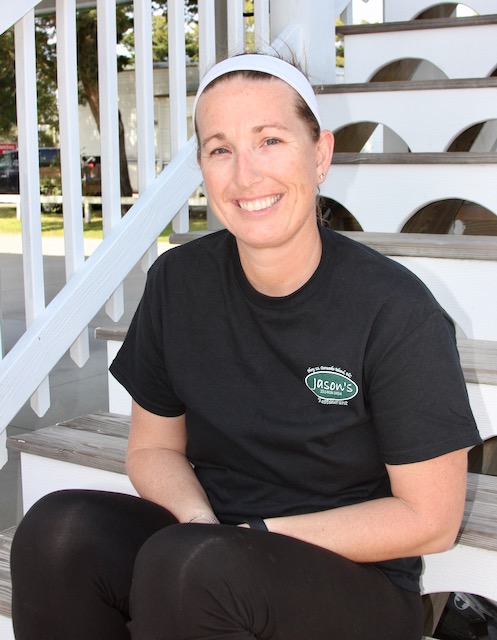
If you attend an Ocracoke School event you’re likely to see Noel Goodwin helping out.
And for all of her efforts, she is among 20 North Carolinians who will receive the 2025 Governor’s Medallion Award for Volunteer Service on May 12 in Raleigh.
Nominated by Ocracoke School Principal Jeanie Owens, Goodwin was chosen for the Medallion honor among hundreds of others nominated from all over the state.
These awards honor citizens who have shown concern and compassion for their neighbors by making a significant contribution to their community through volunteer service.
“We’re so happy for her to be selected,” said Chris Bowen of the Beaufort-Hyde partnership for Children, who coordinates the nominations for Hyde and Beaufort counties. “It’s just a huge honor to receive the medallion. We’re thrilled that we have another outstanding volunteer in our county.”
Goodwin doesn’t seek recognition for the hours she gives as a member of the Ocracoke School PTA and Boosters, organizing events and mentoring students.
“I volunteer not for the recognition but because it is the right thing to do,” Goodwin said in an interview. “For me, it’s all for the kids.”
Goodwin can often be seen helping behind the scenes for the events her kids, sons Danny, 17, Xander, 9, and Xavier, 8, and daughter, Lela, 12, are involved with.
Owens noted Goodwin’s steadfastness, dependability and ability to get things done that make her a valuable asset to the community.
“Noel is not just a volunteer; she is a steadfast supporter and advocate for students: ordering all the supplies for high school basketball concessions, ensuring the games run smoothly… organizing and coaching the Saturday youth basketball program, providing young athletes with opportunities to develop their skills,” Owens said in her nomination.
A native of Cedar Island, where she grew up playing basketball and softball, alongside her husband Danny Palacios, Goodwin has worked at the Pony Island Restaurant for 25 years and Jason’s Restaurant for 10 years.
And her family is everything.
“In my free time I enjoy spending time with my family,” Goodwin said. “We spend time together in our pool, on the boat tubing, clamming and trying to catch fish (try being the key word).”
Goodwin is humble about the honor.
“I always tell everyone Ocracoke is the best place in the world to raise your family and I just try to do my part to make it be the best that it can be,” she said
The volunteer service award was created by the Office of the Governor in 1979 and the Governor’s Medallion Award for Volunteer Service began in 2006 to recognize the top 20 volunteers in the state.
A statewide panel reviews and evaluates all nominations to determine the award recipients.