
Text and photos by Jeanne Brook
Between the Ocracoke United Methodist Church and the family graveyards on Howard Street lay a tangle of brush, vines and poison ivy.
It took a village, but over the last year the area was cleared out by church and community members, students and even two goats. An old pathway from Howard Street was even discovered.
OUMC, Ocracoke Alive and Ocracoke School are coordinating the effort to transform the space into a garden and sanctuary.
Church pastor Rev. Desirée Adams explains that the harvests will supplement the local food pantry and the community lunches program.
Adams reflected on environmental theology.
“In 2008, Pope Benedict XVI declared ‘polluting the environment’ to be one of seven new sins that required repentance,” she said. “That’s a big declaration in a society that feels justified in exploiting, abusing, and depleting natural resources.

“It also recognized the extreme harm we cause to one another, especially the already vulnerable and impoverished, when we refuse to take environmental stewardship seriously.
“It signaled that what I believed to be socially important was in alignment with my faith.”
Thus, the impetus for “Soul Seeds Food Garden and Sanctuary,” which is what the area will be called.
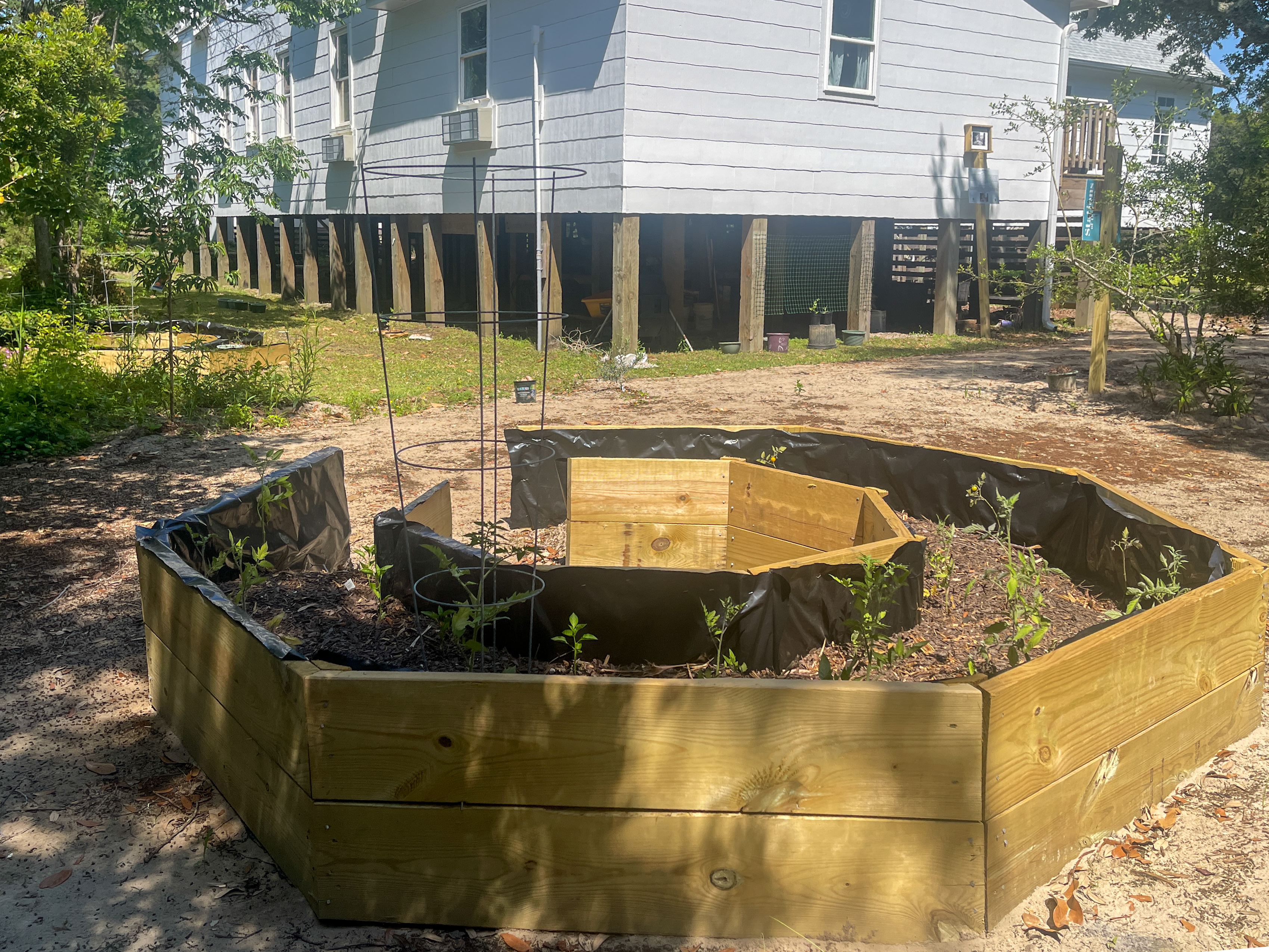
With the property cleared, students from the school’s shop class have built two garden beds in octagon shapes. Visitors and volunteers can get up close to the plants through an open side and path to the center.
The beds were filled using the “Hügelkultur” method, which is a German farming technique. Dried logs and branches are placed in the middle of the bed and compost is added to the mound. Covered up with manure, this should hold in moisture well.
The students are focused on vertical gardening to save space and have planted peppers and tomatoes from seed and marigolds as a companion plant to deter pests.
Watermelon seeds have sprouted, and soon peas and beans should be climbing.
Soul Seeds has been working with B&KM Farms of Myton, Utah, to purchase organic and non-GMO seeds.
When the company learned what this garden was for they were interested in helping determine what best to plant in this area and when.
Vegetables are just the beginning.
A tiered herb garden with medicinal and culinary plants, such as sage and chamomile, is in the plans. Some wild berries and grape vines have been preserved.
“Let them do their thing as we see what natural plants we can cultivate,” Adams said. “This is meant to be a place to relax and contemplate and, I don’t know, watch the food grow.”
They kept two yaupon trees and have brought in some fruit trees and bushes including peach, olive and blueberries.
The Outer Banks Community Foundation and NC Conference of The United Methodist Church are providing funds through grants and sponsorships.
A visitor from the N.C. Sweetpotato Commission brought some varieties of sweet potatoes for the garden.
An important way to reduce the amount of waste transported off the island is composting.
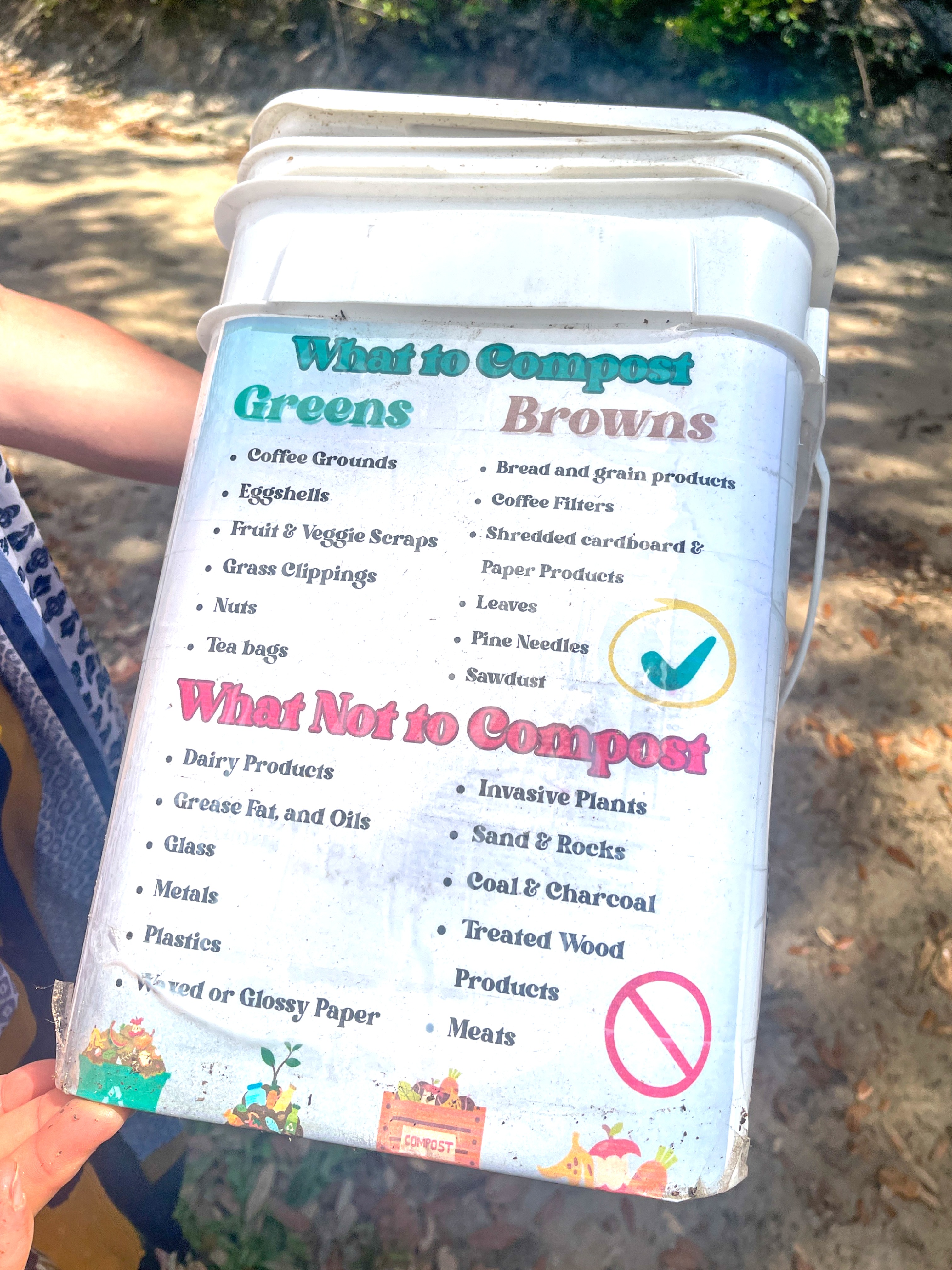
Soul Seeds encourages individual composting by offering take-home buckets with lists of what can and cannot go into the compost.
Once filled, these can be returned and dumped into the tumbler.
There is also an effort to coordinate with local businesses to collect coffee grinds, eggshells, shredded paper and other compost appropriate food waste.
Also, working with O2Compost and with financial support from Ocracoke Alive, the garden will have an aerated composting system. This means that scraps collected can be turned into compost in one month.
A water barrel sits ready to collect rain for redistribution into the gardens. It was obtained from a C2C grant from the NC Conference of The United Methodist Church, and the group is looking at additional ways of collecting rainwater.
What’s to come?
Picture more octagon garden beds, pathways built from pavers, art signs designed by students, a retaining wall to help support the graveyard behind the hill, and sitting areas built by Ocracoke School students.
Already it is a place of peace and respite, with visits from local wildlife.
Eastern box turtles, Scarlet Tanagers and a Great Crested Flycatcher were recently spotted.
You can contribute by dropping off items for compost and performing other garden duties.
“This project has had so much expert input and will continue to be guided as we figure it out,” says Desirée.
To be involved, send an email to ocracokenccumc@gmail.com.
https://www.ocracokeumc.com/food-garden-sanctuary


