Home Blog Page 453

Heard (make that: Seen) on Ocracoke: Jef the Mime

2
Jef the Mime. Photo by Ann Ehringhaus

By Peter Vankevich

Jef Lambdin has been a regular performer at the Ocrafolk Festival since its inception.  When he lived in Buxton on Hatteras Island, it was a short commute, but now he returns each year from his home in Lumberton, NC, where he lives with his darling wife, Dencie; his two cats, Tabitha and Sammie; and his new puppy, Lucy.

He is listed in the NC Arts Council’s Touring Artist Directory and is a designated teaching artist by the North Carolina Arts Council. As a mime, he apprenticed with C.W. Metcalf and also studied with Tony Montanaro and Jacques Lecoq. Not only is he skilled at mime and variety arts, but also unicycling, stilt walking and mask making as well.

In 1976 he began his career as a member of TOUCH, North Carolina’s touring mime theater ensemble. He has performed throughout the southeastern United States including in schools such as the Ocracoke School, hospitals and prisons, day care centers, Lincoln Center, the Kennedy Center and college fine arts centers, in concert halls, and on UNC-TV.

Jef also appeared in productions by other theater companies, including: as a mime with Omimeo in Charlotte, NC; as the plant, “Audrey II” in Atlanta and Raleigh productions of “Little Shop of Horrors”; as The Mute in Flat Rock Playhouse and Temple Theater productions of “The Fantasticks”; and with his juggling partner, Ken Kaye, and as a street performer/juggler in the opera “I Pagliacci.”

These days, Jef performs solo at fairs and festivals throughout the Southeast and shares his arts education work with students of all ages.

Amazingly, Jef the Mime agreed to a rare interview as part of the Heard on Ocracoke profiles for the Ocracoke Observer.

Observer:  What is it about the Ocrafolk Festival that you find so appealing?

Jef: ………………………………………..          …………,           …………..                 ………………………………………………………

Observer: You are really articulate, but once your red nose appears, you get silent. Why is that?

Jef: ……………………………………………,       …………………..!

Observer: You have a lot of skills that make your performances wonderful without saying a word. Have you considered doing away with the mime bit and include talking?

Jef: ……………………………………………………………………

Observer:  I think, we should have caught you before you got your game face on. Do you wish to add anything more?

Jef: …………………………………………………..     😉

Observer: Thank you for this, well, rather different interview. I think it’s best that people actually watch you rather than gain any great insights from Heard on Ocracoke.

Jef: ……………………………………           ………………     &     ………………..    !!!!!

To learn more about Jef the Mime, check out his website at http://www.jefthemime.com/

For classic Jef the Mime insights, click here 

Jef the Mime t-shirt  PS.

National Park Service to offer special programs for World Oceans Day

0
A junior rangers in the Cape Hatteras National Seashore talks about the ecosystem. Photo courtesy of CHNS.

The National Park Service Outer Banks Group will offer special programs Saturday (June 8) for World Oceans Day.

First recognized by the United Nations in 2008, World Oceans Day is designated as a special day for people around the globe to celebrate ocean resources.

Programs on all three islands are free and do not require reservations.

While the NPS will have a booth at the Ocrafolk Festival that day, there will be a 30-minute program on barrier island nature at 11 a.m. at the NPS Visitor Center.

The program will cover plants, animals, and shifting sands of the Outer Banks.  

 Other programs along the CHNS are as follows:

 9 to 11 a.m., Hatteras Island: Our Ocean. Explore the wild side of our ocean at an interactive discovery table. Join a ranger to touch turtle shells, whale bones and much more as you discover how life in our ocean is tied to our lives on land.  Meet just outside the Cape Hatteras Lighthouse Visitor Center.

 11 a.m., Hatteras Island: Ocean Discovery Walk (1 hour). Join a ranger for a walk to the beach and discover the nature of the ocean. Learn about oceanography, coastal geology, and the key roles our oceans play in sustaining life on earth.  Bring sunscreen, water, and a hat.  Meet at the Cape Hatteras Lighthouse Lifeguarded Beach.

 11 a.m., Bodie Island: The Ocean and the Next Generation (1 hour). Join a ranger for an afternoon walk along the beach and learn about the future role of our oceans in providing food, recreational opportunities, and critical habitat for endangered species. Find local marine life and discover their roles in the surrounding ocean ecosystem of Cape Hatteras National Seashore. Bring sunscreen, water, bug spray, and a hat.  Meet at the Coquina Beach parking lot.

In addition, the Park Service has scheduled a beach clean-up day along the seashore to remove trash and man-made debris from the beaches.

    Clean-up day on Ocracoke is from 9 to 11 a.m. Wednesday, June 24  June 24 at the lifeguard beach parking lot.

    Bring leather gloves, water, snacks, sunscreen and bug spray. Wear appropriate clothing, including toe-closed shoes and hats. Trash bags will be provided. Children under the age of 18 must have a parent or legal guardian with them.

Editorial: Safety on the Beach

0

Oct 4 2014 015

We have posted an article on common sense safety on swimming in the ocean and we urge you to read it carefully. Click here.

Rip currents are a danger here, as they are on many other beaches throughout world. Our strong recommendation is that if you intend to swim in the ocean of Ocracoke, do so at “Lifeguard Beach” when the lifeguards are on duty.

We have a few more comments to add about beach safety.

Be particularly vigilant with young children playing in the water. It doesn’t take but a moment for a child to stray out too far, or for a sudden large wave to appear.

Every year, lightning strikes and kills people on or near bodies of water. Summer is the peak season for outdoor and water-related activities, and is when most lightning deaths and injuries occur.

If the lifeguards signal people to get off the beach, promptly follow their advice.

For those that have a smart phone, they should have programmed weather alerts and bookmark a site that has a weather radar that can provide a heads-up as to the direction a distant storm is heading.

But, importantly for all, use your own audio-visuals. If you see lightening in the air, get off the beach immediately and head to a safe location, and as the saying goes: “if thunder roars, go indoors.”

Rip currents, not sharks, are the biggest dangers at the beach

0
Anatomy1
Rip current graphic courtesy of ripcurrents.com. Used by permission.

By Connie Leinbach

Sue Dayton will never forget how terrified she was when she was caught in a rip current in 1995 off the coast of Mexico.

Dayton, who owns Roxy’s Antiques on Ocracoke, didn’t know how to get out of it.

“All I could think of, when I was going down was, ‘Damn! I spent my entire life climbing mountains, falling in crevasses, getting caught in avalanches, etc., and I’m gonna lose my life drowning in the ocean!’” she said.

She shudders at the remembrance.

Somehow, the current released her on her third time down.

“Then some young girls saw me and pulled me up on the beach,” she said shaking her head.

Despite this, Dayton has not lost her love of the ocean, having moved to the island last year and set up shop.

But she was lucky to get out of the rip current.  Some do not, and in recent years the drownings that have occurred on Ocracoke have often been due to rip currents.

Dr. Stephen P. Leatherman, aka “Dr. Beach,” America’s foremost expert on beaches, and who named Ocracoke Lifeguard beach the best beach in 2007, has a video on his website where he asks beach-goers what is their greatest fear in the ocean.

“Sharks,” say those he interviews, but Leatherman corrects that.

“Although estimates vary, rip currents are responsible for approximately 150 deaths every year in the U.S. and likely thousands worldwide,” according to his website.

Rip currents are like rivers in the sea, Leatherman says. They often look like an area of calm water between waves, but they are actually funneling out through a hole in the sand bar and into deep water.

In time for Rip Current Preparedness Week, which kicks off June 7, this video and more details can be found on his website at www.drbeach.org. In addition, “Dr. Beach” just named the Cape Hatteras Beach the #5 best beach for this year.

During the warm months, the National Weather Service issues daily surf zone forecasts for local beaches.  

This website also has a lot of information on rip current safety, how to spot them and what to do: http://www.ripcurrents.noaa.gov/index.shtml#

 The NPS has the same rip current diagrams posted at the Lifeguard and Pony Pen beaches.   

Beach-goers need to know what to do when unexpectedly caught in a current that’s rushing out to sea.

The following are some safety tips, courtesy of www.ripcurrents.com:

–Swim at locations with lifeguards.

If you are caught in a rip current:

–DON’T PANIC, which wastes your energy and keeps you from thinking clearly. 
–Don’t attempt to swim against the current directly back to shore. 
–Swim parallel to shore until you are out of the current as the offshore flow is restricted to the narrow rip neck. 
–Float calmly out with the rip if you cannot break out by swimming perpendicular to the current.  When it subsides, just beyond the surf zone, swim diagonally back to shore.
–If you are on shore and see someone in distress, alert lifeguards and call 911. If you go in the water, take flotation devices for yourself and the person or persons caught in the rip.

Published in 2015

Ocrafolk Festival this weekend

0
The Live Oak Stage at Books to Be Red, Ocrafolk Festival 2015. Staff photo

The Ocrafolk Festival this weekend (June 5 to 7) will feature a host of new performers at the 16th edition of this weekend event. New performers this year include the Blue Eyed Bettys, Kaira Ba, Los Tarascos de Michoacan, Victor & Penny and the Yes Team.

The festival begins Friday evening with a fish fry, art auction and concert at the Community Center. Presented by Ocracoke Alive, this festival showcases music, storytelling, artisans and characters, and attracts thousands of visitors to the island. Saturday and Sunday’s events begin at 9 a.m. with about 30 acts from all over the state and beyond.

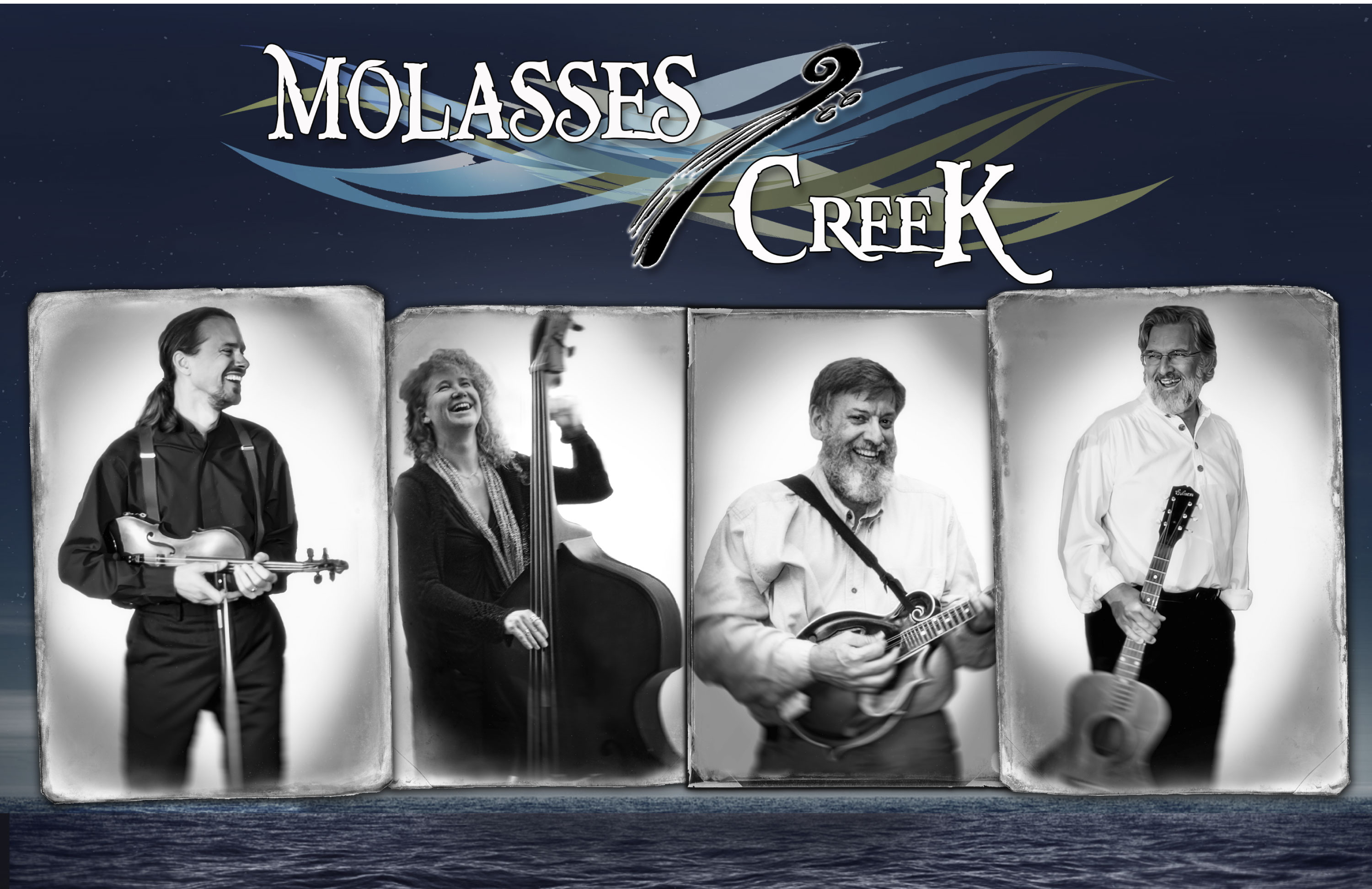
Returning to the stage will be festival host band Molasses Creek, storyteller Donald Davis, Martin Garrish, Mipso, The Outliers, Donald Thompson Band, The Alberti Flea Circus, Paperhand Puppets, Craicdown, Jacob Johnson, The Green Grass Cloggers, Bob Zentz & Jeanne McDougal, John Golden, Louis Allen, Philip Howard, Capt. Rob Temple, Chainsaw Artist Clyde Jones, Jef the Mime, Ocrachicks, and more.
Juried artisans in and around the festival grounds will showcase fine arts and crafts in painting, sculpture, wood carving, jewelry, textiles and more, and food will be available by some of Ocracoke’s finest eateries. The Ocrafolk Festival was rated as one of the top 15 island festivals in the world a few years ago by Coastal Living Magazine.

Molasses Creek has changed personnel. Kim France, hailing from Asheville and who plays the acoustic bass, joined the group following the departure of Marcy Brenner and Lou Castro.MC Poster_2015_2a

“Kim’s a phenomenal acoustic bass player and a lot of fun to play with,” noted David Tweedie, the fiddler for the contemporary folk group that’s been a part of the island music scene for more than 20 years. “She brings a jazzy, world music flair on the bass.”

Along with France, joining Tweedie, Gary Mitchell and Gerald Hampton at the festival will be Sarah Osborne, who will play the claw hammer banjo.

The group will roll out its new album “Water Bound.”

Molasses Creek plays Thursdays in the summer and Wednesday nights with the Ocrafolk Opry, both at 8 p.m. in the Deepwater Theater on School Road.

Robbie Link. Photo by P. Vankevich

For the festival schedule and more, visit www.ocracokealive.org.

Recipients of the Hyde County Chamber of Commerce Tourism award, Ocracoke Alive, Inc., is a private non-profit committed to enriching the Ocracoke Island community through the encouraging and sponsoring cultural, artistic, educational, and environmental activities including the production of plays, musicals, musical events, exhibits, schools, workshops and festivals.

Making fish prints at Ocrafolk Festival
Jason Wells and his son Griffin make fish prints at the Ocrafolk Festival.

Heard on Ocracoke: Craicdown

0


Craicdown. Photo by Ann Ehringhaus

To listen to Up in the Air from  Craicdown’s album, Roads, click below.

By Peter Vankevich

First the name. It derives from the Irish language. Craic, pronounced as crack, is a term for news, gossip, and enjoyable conversation.

So, “craicdown” means a good time. It is a fitting name for this trio from Chapel Hill since their performances create a special rapport with their audiences with lots of quick-witted humor and banter between songs.

Rob Sharer plays guitar, mandolin, Irish flute, fiddle and is the main vocalist. David DiGiuseppe plays accordion and Irish cittern. Jim Roberts handles drums and percussions.

Each of the members brings a distinct international influence to Craicdown performances which gives them a unique style. They describe their music as “world acousticana,” that is, acoustic roots music with a high-energy, rock-inspired flare.

A Craicdown performance could include both songs and instrumental pieces ranging in style from Americana to reggae-sounding vocals, Celtic influenced jigs and reels and music of Brazil and other cultures in Latin America. Each of them has performed solo and with other bands over the years.

Rob Sharer lived for several years in Clare, Ireland, where he performed regularly on

Fiddler Dave & Rob sharer, Ocrafolk Festival
Fiddler Dave & Rob sharer, Ocrafolk Festival 2010. Photo by P. Vankevich

the music circuit as well as on several albums as a side musician for many of Clare’s finest musicians. He recorded a solo album of original songs, “Vines,” and teaches Irish music.

David DiGiuseppe, who began accordion lessons at eight, has recorded CDs with his other bands, Footloose and Contrazz, and has appeared on many other CDs backing other musicians.  He is equally at home performing Irish tunes in a pub, French musettes in a cabaret, contra or Cajun music for a dance, or in the intimate setting of a concert hall. A renowned accordionist, he published three instructional books for playing this instrument.

Jim Roberts  has been fascinated with percussion since childhood and plays instruments from all over the world including the West African djembe, Cuban cajon, Middle Eastern dumbek, and Brazilian panderio. Included in his extensive music history, he has released three recordings: “CapeTown,” with South African singer Paul Petersen; “Two Traditions,” featuring the Horse Flies; and “Tranze is the Danze (Ancient Hand Project),” featuring Beth Nielson Chapman and Victor Wooten. He is  also a producer and studio engineer.

Craicdown has played at the Ocrafolk Festival for several years, and will do so again this year. They have also provided music workshops for the students at Ocracoke School.

Rob Sharer is an unabashed fan of the island.

“Ocracoke has always been a magic place for me as an artist,” he said. “Everyone says that, right? But when I say, magic, I mean that inexplicable, beautiful things are always happening all around me when I’m there.

“Old friends from far away suddenly turn up, new friends appear where strangers once stood, and songs come up out of the ground. It’s as if inspiration was magma, and the island is a thin place in the earth’s crust where it wells up. I never leave Ocracoke without a basketful of new ideas. Some of my best songs were born there, or on the ferry. It’s a long way to Swan Quarter.”

Craicdown looks forward to Ocrafolk every year. Long may it run!

To learn more about Craicdown, check out website: http://www.craicdown.com/

Facebook:  https://www.facebook.com/craicdown?fref=ts

Listen to Up in the Air:

Birds of Ocracoke: The Ruddy Turnstone

0

Ruddy Turnstone PS IMG_3624

To see more profiles in the Birds of Ocracoke series, click here 

Arenaria interpres


Text and Photos by Peter Vankevich     

A chunky shorebird with short orange legs and dark bill. In spring, it has stunning harlequin-like plumage of white, black and orange/red colors. Its basic plumage in fall and winter is more subtle with a brownish back and white belly.

It breeds in the high arctic tundra and is circumpolar.

In its breeding area in the arctic, it feeds primarily on insects. Post breeding its habitat is rocky and sandy beaches and gets its name foraging by probing and turning over rocks, pebbles, seaweeds, sea shells, and other items with its strong bill. Its diet is diverse and includes small fish, insects, worms, mollusks and carrion, including dead fish.

Winters on the coast in the East from Massachusetts in small numbers all the way to South America.

Listen

(audio provided courtesy of OhioLINK Digital Resource Commons)

When to see:  Best times are spring up to the end of May and in August into the fall. In winter, may be on Ocracoke in small numbers or absent. A few nonbreeders may be around in summer.

Where: On the beach, especially South Point, northern Ferry terminal area, Pony Pasture when there is standing water, sound side when flats are exposed, and Springer’s Pont.

Ruddy Turnstone Photoshop_IMG_5042
Ruddy Turnstone basic plumage


Ruddy Turnstone & Sanderling Feeding on Shark
Ruddy Turnstone and Sanderling feasting on a dead shark


Birds of the Outer Banks Checklist 

Canceled: Susan Enan, takes Bring on the Song concert series to Ocracoke

0

Susan Enan


Update Sunday 1:56 p.m:  Unfortunately, the Susan Enan on-island concert scheduled for tomorrow has been canceled. We hope to have her back in the future. Check out the Youtube performance below to see what we will miss.

Susan Enan is an unusual performer.  Her preferred performances are not concert halls or noisy pubs, but are in people’s homes, called House Concerts, which is a very personal and interactive way to hear music up close.

Born in England, she now lives in New York.  Susan has performed throughout much of the world and, in addition to peoples’ homes, has performed in unusual locations including a cave and in the Arctic.

She will be performing on Ocracoke 7:15 p.m. this Monday (June 1). Tickets are $15. Due to the limited space, to reserve a space, contact the hosts, Leslie Lanier 252 928-3936 or Jason & Karen Scully-Clemons 256-527—5755.

If you are curious, about her music, check out her hit song, Bring on the Wonder, currently on YouTube:  https://www.youtube.com/watch?v=zb0x4_2xocY


Hyde County proposes balanced budget, no tax increase

0

By Connie Leinbach

Hyde County manager Bill Rich has proposed a lower county budget for next year that still includes restoring art instruction for Mattamuskeet and Ocracoke schools.

The budget is scheduled to be approved at the June 1 meeting in the Hyde County Government Center multi-use room and the Ocracoke School Commons room using electronic conferencing equipment.

Rich’s proposed balanced budget expenses are $15.95 million, which is lower than last year’s budget of $16.77 million.

The county helps fund the schools in what is called a local match, and although the school district asked for a higher amount of $1.428 million for next year, Rich is excited about their proposal.

“Their prior increase requests were for janitorial and legal fees,” he said “This request is smart. It gives us ownership and includes exciting stuff to see.”

Last year, the school’s local budget eliminated art instruction and did not include a allocation of $10,000 for Ocracoke Community Park ball field, both of which numerous island residents commented on in meetings in the fall and winter.

Hyde County schools have an overall budget of about $11 million, which includes the yearly local match from Hyde County.  The rest of their budget comes from the state.

The school district’s local request is $139,800 higher than last year and higher than the 2009 appropriation of $1.424 million, which was the highest in the last six years.

At a budget workshop meeting May 19, no commissioners voiced opposition to the school’s budget request.

In addition, Rich said the fund balance is now 65 percent better than what it was when he started in March 2013.

The state requires all counties to have a fund balance, which is a kind of rainy day fund.

“If your fund balance is under 8 percent of the total budget, then the state comes in and takes you over,” Rich said.

The county’s fund balance at the end of 2014 was $4.29 million, which was 37.35 percent. This year Rich is hoping to raise the fund balance to $4.5 million.

Prior to his becoming county manager, the fund balance was in a severe debt, he said.  Money added to the fund balance is like banking money, he said.

“We’ve been more aggressive in property tax collection,” Rich said, noting that tax collection has improved to a 94.4 percent rate. “I know I can get that to 97 percent.  Every percent equals $100,000 in revenue.”

Revenues also have risen in sales and occupancy taxes, he said.

Rich also realized more savings in the county budget by changing the health insurance provider for the 115 county employees who are insured.


Some common island plants are toxic to pets

0

Health & Wellness

May  2015
By TL Grace West

Dr. Mark Grossman of the Roanoke Island Animal Clinic in Manteo supplied the following information concerning some plants that are toxic to our pets and what you can do to help while on the way to the vet.

These plants contain toxins that affect the heart and can easily kill a pet or a human if enough is ingested.

Oleander: The main one on the Outer Banks is oleander. One oleander leaf can kill a dog or a human.

“I had a puppy consume a part of a plant in Avon, and the pup died before the owners could even get the poor pup to me,” Dr. Grossman noted.

Lily of the Valley and foxglove: Lilies are probably one of the most dangerous plants for cats, containing a chemical that is highly toxic to the kidneys.

The Easter lily is the most common, but day lily, Asian lily and star gazer also are toxic.   Even exposure to the pollen of an Easter lily plant can cause kidney failure.

Holly plant and berries: Both plant and berries are toxic. Symptoms can include severe gastrointestinal upset and central nervous system depression.

Mistletoe:  This plant causes acute gastrointestinal upset, vomiting, nausea and diarrhea. It can occur after a delay of several hours, and can cause delirium, ataxia (drunkenness), coma or hyperesthesia, seizures, extending of  the neck, and difficulty breathing. Death can occur 10 to 16 hours after ingestion.

Onion and garlic poisoning: The toxic aspects of these plants cause cells to rupture in both cats and dogs causing the pet to be very anemic.If enough is consumed—either in scrap food or outside plants–it can cause death from anemia in a few days. Discolored, dark urine may be seen. Weakness, rapid breathing, and a rapid heart rate may be noted. Some animals may be jaundiced, and/or have an onion odor to the breath. Cats are more sensitive than dogs. About 4 tsp per 10 pounds for a dog and almost half of that for a cat could cause toxicities.  It takes less of the concentrated powder.  Garlic does the same and is actually more toxic than onion because, gram per gram, it contains more of the toxin.

Calcium oxalate-containing plants: 

These plants contain small cells that when crushed shoot out thousands of spear-like structures that can cause intense irritation and inflammation of the mouth and G.I. tract.

While not a poison per se they can cause lots of damage when chewed by a pet.

Some of the more common oxalate-containing plants are:  Philodendron, Dumb Cane (dieffenbachia), Peace Lilies, Calla Lilly, Mother-in-Law plant, Elephant Ear and Pothos.
Sago Palm: This is becoming more and more of a problem as it becomes more popular in this area.

Even very young plants are toxic enough to cause death in animals. Dogs and cats are susceptible, as are horses, cows and people. The seeds are the most toxic component.

The toxin in this palm causes severe and often irreversible damage to the liver.  Clinical signs include vomiting, dark bloody stools, jaundice, increased thirst, hemorrhagic gastroenteritis, bruising, liver damage, liver failure and death.  Without immediate and aggressive veterinary treatment, most of these pets will die within days.

Marijuana: “Yep. We need to mention this one,” said Grossman. “Due to its increasing popularity, we are seeing more pet poisonings in dogs and cats who obtain access to their owners’ stash.”

The toxins are various resins, mainly THC and related compounds. Clinical signs in our pets include ataxia, vomiting, dilated pupils, depression, hypothermia, tremors and salivation. Sometimes the pets become hyper-excitable.

Depression and lethargy can last up to 36 hours.
The remedy for poisoning from the above plants is to administer hydrogen peroxide (the kind used to clean cuts, which is 3 percent) to get the pet to vomit before or while on the way to the vet’s office.

The dose for dogs is about 5 to 15 ml per 10 pounds of body weight. That’s about one teaspoon to a tablespoon per 10 pounds of body weight. Even for the largest dog, never give more then 5 tablespoons, Grossman said.

Owners can also put a small pinch of salt in with it to help make the peroxide work better.  For cats, the recommended dose is one-half to one teaspoon.

So, enjoy your gardens while being careful with these plants with our beloved pets.

2.13 grace close up

Terrilynn Grace West lives, gardens and works on Oc­racoke providing warm water massage therapy.